
A machine can look ready for paint while still carrying failed coating in seams, rust around fasteners, and contamination that will cause the next finish to fail. The best coating removal for machinery is not one universal method. It is the method that removes the existing coating thoroughly without damaging the substrate, disrupting precision parts, or creating an unnecessary cleanup problem.
For heavy equipment, shop machinery, fleet assets, and industrial components, abrasive blasting is often the most efficient route to a clean, paint-ready surface. But the blasting media, pressure, containment plan, and level of disassembly must match the job. A cast steel frame and a thin aluminum panel should not be treated the same way.
Why Machinery Needs More Than Paint Stripping
Machinery coatings do more than change appearance. Paint, industrial enamel, epoxy, powder coating, and protective linings are often applied to resist moisture, abrasion, chemicals, and impact. Once those coatings crack, lift, or wear through, corrosion can spread under the surface long before it is visible.
Removing only the loose paint may make a machine look better for a short time, but it does not create a dependable foundation for repair or refinishing. Remaining rust, mill scale, oily residue, and poorly bonded coating can interfere with new primer. The result is often early peeling, blistering, or corrosion returning at edges and welds.
A proper removal process exposes the true condition of the asset. It can reveal pitting, cracked welds, damaged guards, thin areas, and repairs that need attention before money is spent on a new coating system.
The Best Coating Removal for Machinery Depends on the Surface
The right approach begins with three questions: What is the coating, what is the machinery made of, and what needs to happen after removal? The answer may be abrasive blasting, dry ice blasting, chemical stripping, mechanical grinding, or a combination of methods.
Abrasive Blasting for Heavy Coatings and Corrosion
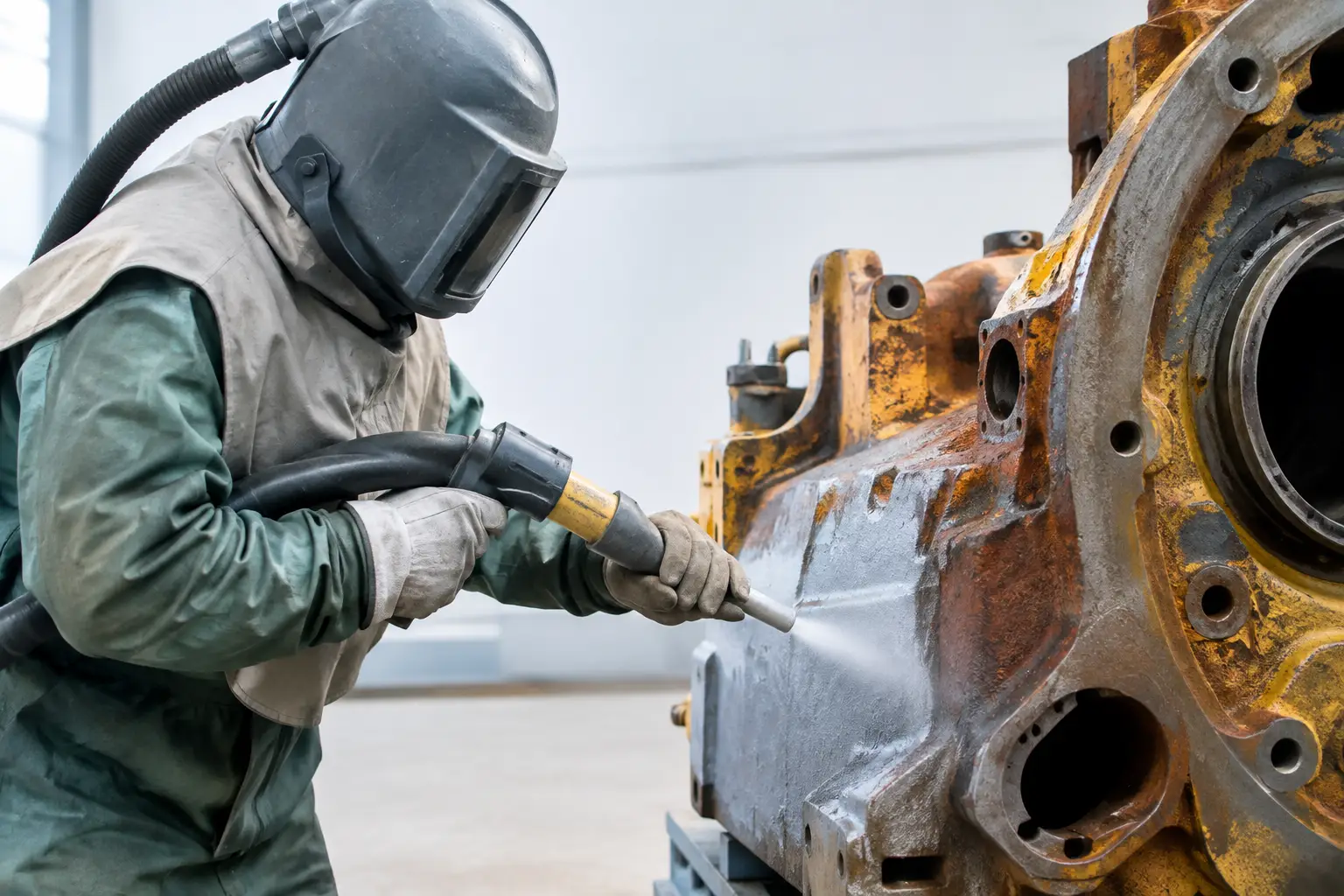
Abrasive blasting uses compressed air to propel media against the surface. It is especially effective for machinery with thick paint, rust, scale, old industrial coatings, and hard-to-reach profiles around brackets, welds, frames, and structural components.
For many steel machine parts, abrasive blasting provides the most complete coating removal in the least amount of time. It strips the failed finish while creating an anchor profile that helps primer bond properly. That profile matters. A perfectly smooth surface may look clean, but certain coating systems need controlled texture to achieve long-term adhesion.
Media selection is critical. Angular mineral abrasives can cut through heavy coatings and corrosion efficiently on durable steel. Glass bead may be better suited to cleaning and finishing certain metal parts where a less aggressive surface is needed. Soda, plastic media, or other softer abrasives may be considered where coating removal is required but the underlying surface needs greater protection.
Blasting is not automatically the answer for every part of a machine. Bearings, seals, hydraulic cylinders, electrical components, glass, precision-machined surfaces, and sensitive threads need to be removed, masked, or protected before work begins. A professional plan accounts for those areas rather than treating the equipment as one uniform surface.
Dry Ice Blasting for Sensitive Areas
Dry ice blasting uses solid carbon dioxide pellets that break apart on impact. Because the media sublimates rather than remaining as spent abrasive, cleanup can be simpler in some applications. It can be useful for removing grease, oil, grime, and certain coatings from sensitive machinery areas.
Its main advantage is reduced secondary media waste. That can make it a practical option for machinery that cannot be fully moved or where cleanup must be tightly controlled. It is also less abrasive than conventional blasting, which can be valuable around delicate components.
The trade-off is that dry ice blasting is not always aggressive enough for thick rust, tenacious epoxy, scale, or multiple layers of industrial paint. It cleans exceptionally well in the right setting, but it does not replace abrasive blasting when the goal is to cut through heavily bonded coatings and establish a coating profile on steel.
Chemical Stripping for Complex Shapes
Chemical stripping can soften or lift coatings in detailed areas that are difficult to access mechanically. It may be considered for intricate parts, delicate assemblies, or coatings that respond well to a specific stripping product.
The downside is time, containment, and residue. Chemicals must be selected carefully, used safely, and neutralized or cleaned completely before refinishing. If residue remains in seams, bolt holes, or recessed areas, it can compromise the new coating. Chemical stripping also does little to remove corrosion or create the surface profile needed for many industrial primers.
For those reasons, chemical stripping is often a targeted step rather than the complete solution. A machine may be chemically stripped in sensitive spots, then blasted or mechanically prepared where a stronger surface treatment is needed.
Grinding and Mechanical Removal for Repairs
Grinding, wire brushing, needle scaling, and sanding are useful for localized repair work. They can remove loose coating around a weld repair, feather paint edges, clean a small damaged area, or prepare a spot that is not practical to blast.
They are labor-intensive on large equipment, and they can leave coating in pits, corners, and textured surfaces. Mechanical tools may also polish steel rather than creating the profile a primer requires. For a small repair, that may be acceptable. For an entire machine frame or heavily corroded asset, it is rarely the fastest or most consistent option.
What to Consider Before Removing a Coating
The coating itself affects the work plan. Old machinery may have several paint layers, unknown primers, or coatings that require special handling. If there is any concern about lead-containing paint or other hazardous materials, testing should happen before surface preparation starts. The removal method, containment requirements, waste handling, and worker protection may all change based on the results.
The substrate matters just as much. Steel can usually tolerate more aggressive blasting than aluminum, thin sheet metal, fiberglass, or soft cast materials. Excessive pressure or the wrong media can warp thin panels, alter delicate surfaces, or remove more material than intended.
Access is another practical factor. Can the machine be disassembled? Can it be transported? Does the work need to happen at a commercial site? Removing guards, hoses, covers, and removable components before blasting often produces a cleaner result because hidden corrosion and coating edges become accessible.
The final coating system should be planned before removal begins. A machine headed for industrial epoxy may need a different surface profile than one receiving a basic protective enamel. Bare steel should also be primed promptly after blasting. In humid coastal conditions, flash rust can develop quickly on freshly cleaned metal.
Why Surface Preparation Affects the New Finish
New paint cannot compensate for poor preparation. If corrosion remains beneath a coating edge or if dust and oil are left on the substrate, the finish may fail even when high-quality paint is used.
After coating removal, the surface should be inspected for remaining paint, corrosion, embedded media, dust, oil, and damage. If the machinery has been blasted, compressed air cleanup and proper handling are essential before primer is applied. The goal is not simply bare metal. The goal is clean, sound material with the right condition for the next step.
For equipment owners, this is where professional blasting delivers value. The process is not only about making a machine look renewed. It prepares the asset for a repair, coating system, or restoration that can hold up to real working conditions.
When Professional Blasting Is the Better Choice
DIY removal can make sense for a small, simple part with light surface rust. Once the project involves a large machine, heavy coating buildup, industrial paint, difficult access, or sensitive components, professional service is usually the safer and more efficient choice.
Gorilla Sandblasting can assess the condition of machinery, identify the practical preparation method, and help determine what should be removed or protected before blasting. Clear planning reduces rework and helps prevent damage to components that were never meant to see abrasive media.
Before scheduling coating removal, take a close look at the machine's use, condition, and intended finish. A well-chosen removal method gives the next repair or coating job a clean surface to hold onto.