
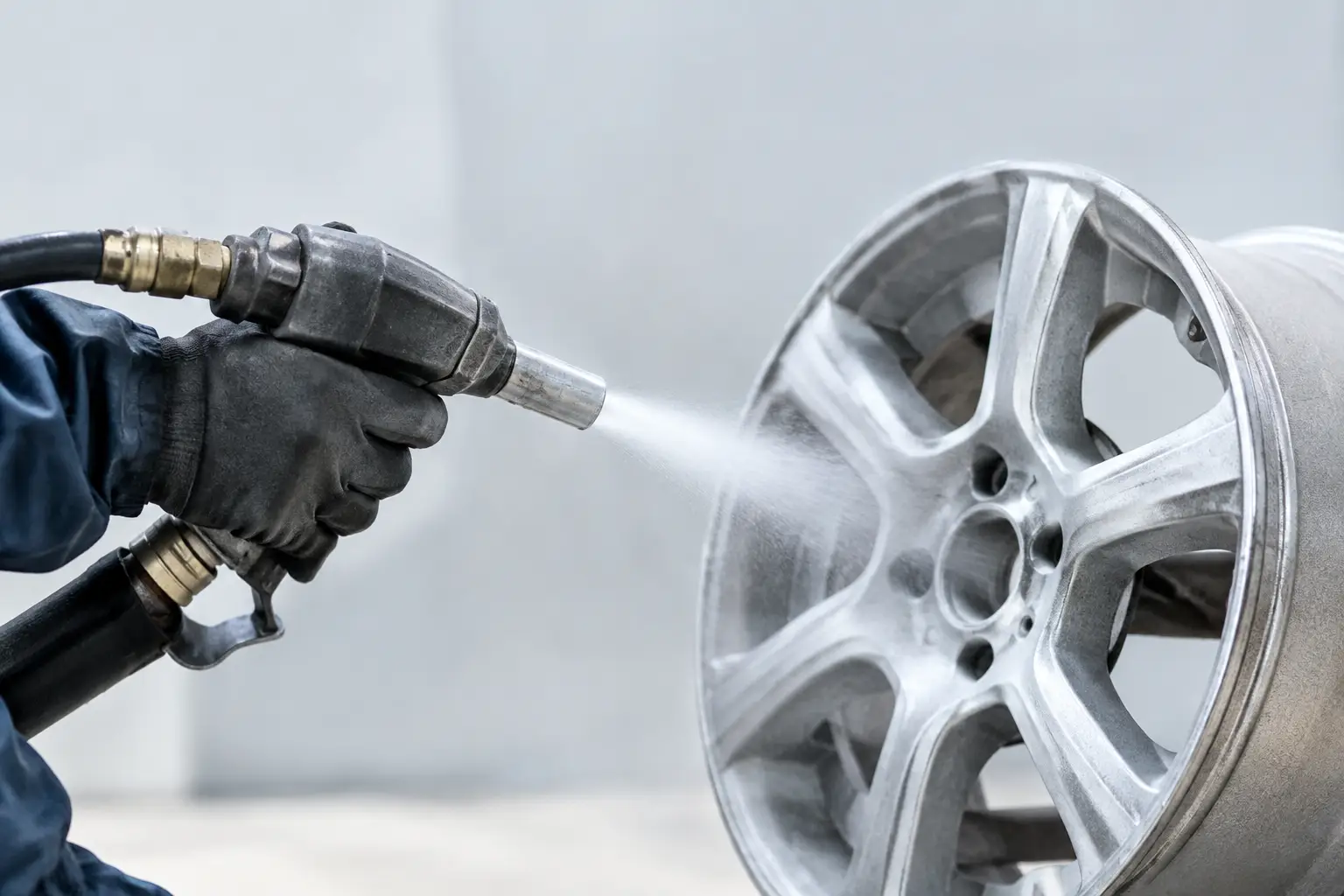
Aluminum can go from clean to damaged in a matter of seconds under the wrong blast setup. Unlike heavy steel, it is a relatively soft metal that can warp, pit, or develop an uneven texture if the media, pressure, or technique is too aggressive. Knowing how to blast aluminum properly means treating it as a controlled surface-preparation job, not simply turning up the pressure and stripping everything off.
For aluminum wheels, boat components, machinery parts, railings, panels, castings, and fabricated metalwork, the goal is usually to remove oxidation, paint, corrosion, or contamination while leaving a clean, consistent surface ready for the next step. That next step may be paint, powder coating, welding, repair, polishing, or protective coating.
Why Aluminum Requires a Different Blasting Approach
Aluminum does not behave like steel during abrasive blasting. It will not rust in the same way, but it does form an oxide layer that can dull the surface and interfere with coating adhesion. It is also softer than steel, which means aggressive media can remove metal, round sharp edges, and leave a profile that is too rough for the finish you want.
Thin aluminum sheet is especially vulnerable. Too much air pressure or excessive heat from concentrated blasting can cause panels to distort. This is a common concern with vehicle body panels, aluminum siding, enclosures, and lighter fabricated pieces.
Cast aluminum is usually more forgiving because it is thicker, but it can still be damaged. Older castings often have uneven surfaces, porosity, or delicate details that need a lighter touch. The right process depends on the part’s thickness, condition, intended finish, and whether it has been previously repaired.
How to Blast Aluminum Safely and Effectively
The most reliable approach is to start with the least aggressive setup that will remove the coating or contamination. Test blasting an inconspicuous area first helps confirm the media, pressure, and nozzle distance before work begins across the full part.
Keep the nozzle moving and avoid holding the blast stream in one spot. A steady sweeping motion prevents gouging and reduces the risk of heat buildup. Directing the stream at a slight angle instead of straight on can also help lift coatings while reducing the force concentrated on the aluminum.
Pressure matters, but there is no single setting that works for every job. Many aluminum projects should begin at lower pressure, often around 20 to 40 PSI, then be adjusted only if the coating is not releasing. Heavy industrial coatings may require more force, while thin sheet aluminum may need even less. Nozzle size, compressor output, media type, and distance from the surface all change the result.
A professional operator watches the surface continuously. If the aluminum starts looking heavily etched, peened, or uneven, the process needs to be adjusted immediately. The cleanest result comes from control, not maximum pressure.
Choose Media Based on the Finish You Need
The blasting media determines much of the final appearance and surface profile. A media that works well for removing scale from structural steel may be completely wrong for an aluminum panel.
Glass bead is a common option when a clean, satin-like finish is desired. It can remove light oxidation and contamination while producing a more uniform appearance than aggressive angular abrasives. It is often used for aluminum parts that will remain visible after blasting.
Plastic media is useful when removing paint or coatings from sensitive aluminum surfaces. It is less aggressive and can strip many finishes without heavily profiling the substrate. This makes it a practical choice for thinner components or parts where preserving dimensions matters.
Soda blasting is another gentle method for certain cleaning jobs. It can remove some coatings and surface contaminants with minimal impact on the metal. However, soda residue must be removed thoroughly before painting or coating, since leftover residue can affect adhesion.
Fine aluminum oxide or garnet may be appropriate when the aluminum needs a stronger anchor profile for an industrial coating. These abrasives are more aggressive, so they require careful pressure control and a skilled operator. They are generally better suited to thicker aluminum components than thin cosmetic panels.
Avoid using steel shot, steel grit, or other ferrous media on aluminum. Steel particles can become embedded in the softer metal and later create rust staining or contamination. Silica sand should also be avoided because of the serious airborne dust hazard it creates.
Remove Paint Without Warping the Metal
Paint removal is one of the most common reasons customers ask about blasting aluminum. The challenge is that thick coatings may need enough energy to break free, while the aluminum underneath still needs protection.
For painted wheels, body panels, marine components, or architectural aluminum, a gentler media and lower pressure are usually the starting point. Stripping may take longer than it would on steel, but the extra time is far less costly than repairing a warped or scarred surface.
Stubborn powder coating, epoxy, and industrial finishes can be harder to remove. In some cases, a combination of chemical stripping and controlled abrasive blasting is more efficient than trying to force the entire coating off with aggressive media. This is especially true for detailed castings, thin panels, or parts with hard-to-reach areas.
If the existing coating may contain lead, chromates, or other hazardous materials, do not treat it as an ordinary blasting job. Proper containment, waste handling, respiratory protection, and site controls are necessary to protect workers, occupants, and the surrounding property.
Surface Preparation Before Paint or Powder Coating
A clean aluminum surface is only useful if it stays clean until coating begins. After blasting, handle the part with clean gloves whenever possible. Bare hands leave oils and salts behind, and those contaminants can show up later as adhesion problems.
Blown-off dust and loose abrasive should be removed with clean, dry compressed air. If the project requires washing or degreasing after blasting, make sure the surface is fully dry before coating. Aluminum quickly reforms its natural oxide layer, so coating should generally happen as soon as the specified preparation process is complete.
The finish requirement should guide the blasting method. A visible decorative part may need a smooth and even satin appearance. A component headed for powder coating may need a controlled profile that helps the coating grip. An aluminum repair area may need a different preparation standard than a full restoration project.
For commercial and industrial work, follow the coating manufacturer’s surface-preparation requirements. A coating can fail even when the aluminum looks clean if the profile is too rough, too smooth, contaminated, or improperly dried.
Common Mistakes When Blasting Aluminum
The biggest mistake is treating aluminum like steel. High pressure, coarse abrasive, and a stationary nozzle can quickly damage a soft metal surface. Another common mistake is choosing media solely for speed. Fast coating removal is not a win if the finished part needs filler, sanding, or replacement afterward.
Contamination is also easy to overlook. Reusing media from steel work, using dirty compressed air, or blasting in an uncontrolled area can leave behind particles that affect the finish. Separate media and clean equipment are especially important for visible aluminum components and high-performance coatings.
Finally, do not assume every aluminum object should be blasted. Very thin sheet, fragile castings, highly polished pieces, and parts with bonded seals, bearings, wiring, or delicate hardware may need masking, disassembly, or another cleaning method altogether.
When Professional Blasting Makes Sense
A small aluminum part may be manageable with the right equipment and a careful test area. Larger, valuable, or difficult-to-replace items are different. Wheels, marine components, machinery housings, railings, fleet parts, structural pieces, and restoration projects often benefit from professional media selection, containment, and finishing preparation.
Gorilla Sandblasting approaches aluminum work with the same focus used on any high-value restoration or coating project: remove what needs to come off, protect the substrate underneath, and leave a surface that is ready for its next stage.
If the aluminum matters, start with a test area and a conservative blast setup. The right process may take a little more patience, but it leaves you with clean metal that is ready to perform and ready to finish.