
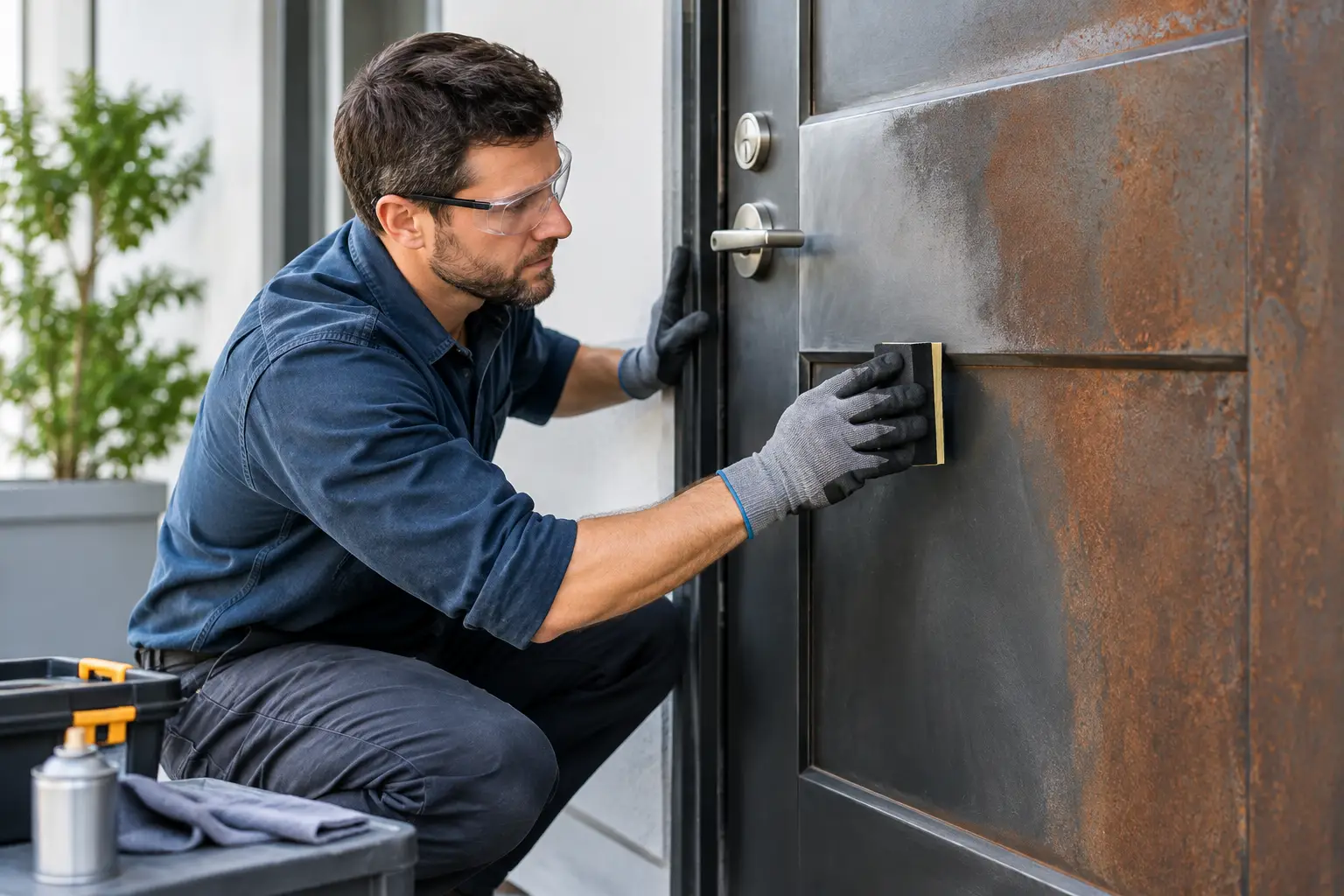
A metal door can look beyond saving long before it actually is. Flaking paint, orange rust around the bottom edge, and a tired finish are common problems, especially on exterior doors exposed to rain, road grit, and changing temperatures. Knowing how to restore metal doors starts with one practical question: is the metal still sound enough to justify restoration?
A properly restored steel door can serve for many more years. The result depends less on the final paint color than on the preparation underneath it. Rust, failed coatings, and contaminants must be removed or stabilized before a new finish goes on. Painting over loose material may improve the appearance briefly, but it will not stop corrosion from continuing beneath the surface.
Start by Inspecting the Door, Frame, and Hardware
Look at the full assembly, not just the face of the door. Check the lower corners, seams, lock area, hinge side, kick plate, and any decorative panels. These locations trap moisture and are often where corrosion begins.
Surface rust usually appears as small spots or light scaling. Moderate rust may leave pitting after the old coating is removed. Deep corrosion is more serious. If the steel has holes, soft edges, major distortion, or rust that has spread through seams, the door may need metal repair or replacement rather than a simple refinish.
Open and close the door before starting work. A door that drags, binds, or has loose hinges may need adjustment before refinishing. There is little value in applying a clean new coating to a door that does not operate correctly.
Also inspect weatherstripping, thresholds, glass inserts, handles, locks, and door sweeps. Removing these pieces where practical creates cleaner edges and prevents paint from bridging moving components. Label hardware and keep fasteners together so reinstalling the door does not become a guessing game.
Choose the Right Level of Surface Preparation
Not every door needs the same treatment. The best method depends on coating failure, rust depth, door construction, and the finish you plan to apply.
For a door with sound paint and only minor chips, washing, spot sanding, rust treatment, and careful priming may be enough. The remaining coating must be firmly bonded. If it lifts at the edges, feels chalky, or cracks when sanded, it is no longer a reliable base.
A door covered in multiple old paint layers, heavy rust, or a failing factory finish needs more complete removal. Mechanical sanding can work on flat areas, but it is slow around panels, seams, louvers, and decorative details. Chemical stripping can loosen paint but creates cleanup work and may leave residue that affects adhesion if it is not handled carefully.
Abrasive blasting is often the most effective option when a metal door needs to be taken back to clean steel. It reaches profiles and tight areas that sanding misses, removes corrosion thoroughly, and creates an even surface for primer. However, the process needs the right media, pressure, and operator control. Thin metal can warp if blasting is too aggressive, while glass, seals, and hardware require protection or removal.
For doors with lead-based coatings or unknown old paint, avoid dry sanding or scraping without proper precautions. Testing and controlled removal protect the people doing the work and prevent contaminated dust from spreading around the property.
How to Restore Metal Doors With Blasting and Coating
Once the door has been assessed, restoration follows a straightforward sequence. The order matters because bare metal begins to oxidize quickly, particularly in damp conditions.
Remove What Should Not Be Blasted or Painted
Take off handles, locks, kick plates, closers, door sweeps, and removable weatherstripping. If the door has glass, it may need to be removed or professionally masked. Hinges can stay in place in some cases, but removing the door from its frame generally allows for more complete cleaning and coating.
Wash the surface first to remove dirt, oil, and residue. Blasting or sanding over grease can drive contaminants into the profile and cause paint problems later. Use a suitable degreaser, rinse as directed, and allow the door to dry fully.
Strip Rust and Failed Coatings
The goal is not simply to make the door look clean. The goal is to remove loose material and create a stable, properly profiled surface that allows primer to bond.
A professional blasting process can be adjusted for the condition of the door. Media selection and pressure are based on the metal thickness, coating type, and desired finish. A heavy industrial steel door can tolerate a different approach than a lighter residential entry door or a decorative metal gate.
After blasting, inspect the exposed steel closely. Pitting may be more visible once rust is gone. Small pits are often acceptable when the correct primer and topcoat are used. Deep pits, open seams, or damaged areas may require welding, metal filler designed for the application, or replacement sections before coating.
Prime Bare Steel Promptly
Bare metal should not sit unprotected. Even a clean door can develop flash rust quickly when humidity is high. Apply a high-quality metal primer as soon as conditions allow, following the coating manufacturer's preparation and recoat requirements.
The right primer depends on the location and expected exposure. An exterior entry door needs corrosion resistance and compatibility with the final paint system. A commercial service door, shop door, or equipment enclosure may need a more demanding coating system based on use, moisture, chemicals, or impact.
Do not treat primer as an optional step. Finish paint adds color and weather resistance, but primer is the layer that bonds to prepared steel and helps protect it from corrosion.
Repair Imperfections Before the Finish Coat
Once the primer has cured as required, inspect the door in angled light. This reveals dents, uneven areas, and remaining surface defects. Minor dents can be filled with a product rated for metal, sanded smooth, and spot-primed before topcoating.
Avoid filling over active rust or loose paint. Filler only performs as well as the surface beneath it. If corrosion remains in a seam, address the cause of moisture entry before applying finish coats.
Apply a Durable Topcoat
Choose an exterior-grade coating suited to metal. A quality direct-to-metal or metal-compatible enamel may be appropriate for many doors, provided the primer and topcoat are compatible. Higher-use commercial doors may benefit from a more durable professional coating system.
Apply thin, even coats rather than one heavy coat. Heavy paint is more likely to sag, trap solvents, and leave soft spots. Pay close attention to the bottom edge, panel edges, and areas around hardware openings, since these are frequent starting points for future coating failure.
Allow the coating to cure before reinstalling hardware or closing the door tightly against weatherstripping. A finish can feel dry to the touch before it has reached its full hardness.
Do Not Ignore the Door Frame and Water Control
A restored door will not stay clean for long if the frame, threshold, or drainage details are failing. Rust on a metal frame should be addressed using the same preparation-first approach. If water runs down behind trim, sits at the threshold, or enters damaged caulking, it will continue attacking the steel.
Check that the sweep seals correctly, the threshold drains, and exterior caulking is intact where appropriate. Do not seal designed drainage paths. Water needs a way out, not another place to collect.
For exterior doors, regular cleaning helps. Rinse away road salt, dirt, and organic buildup, especially near the bottom of the door. Touch up chips early, before moisture reaches exposed steel.
When Professional Help Makes Sense
Restoring a metal door is a manageable maintenance project when rust is light and the existing coating is stable. It becomes more demanding when the door has heavy corrosion, multiple paint layers, detailed metalwork, glass, or an unknown coating history.
Professional surface preparation is especially worthwhile when the final appearance matters or when a door needs to last in a wet, high-use, or commercial setting. Controlled blasting removes the weak foundation that causes repaint jobs to fail early. Gorilla Sandblasting helps property owners and operators start with the clean, properly prepared metal that a durable coating system requires.
A metal door does not need to look new to be worth saving. It needs clean steel where it matters, repairs that address real damage, and a coating system applied before corrosion gets another foothold.