
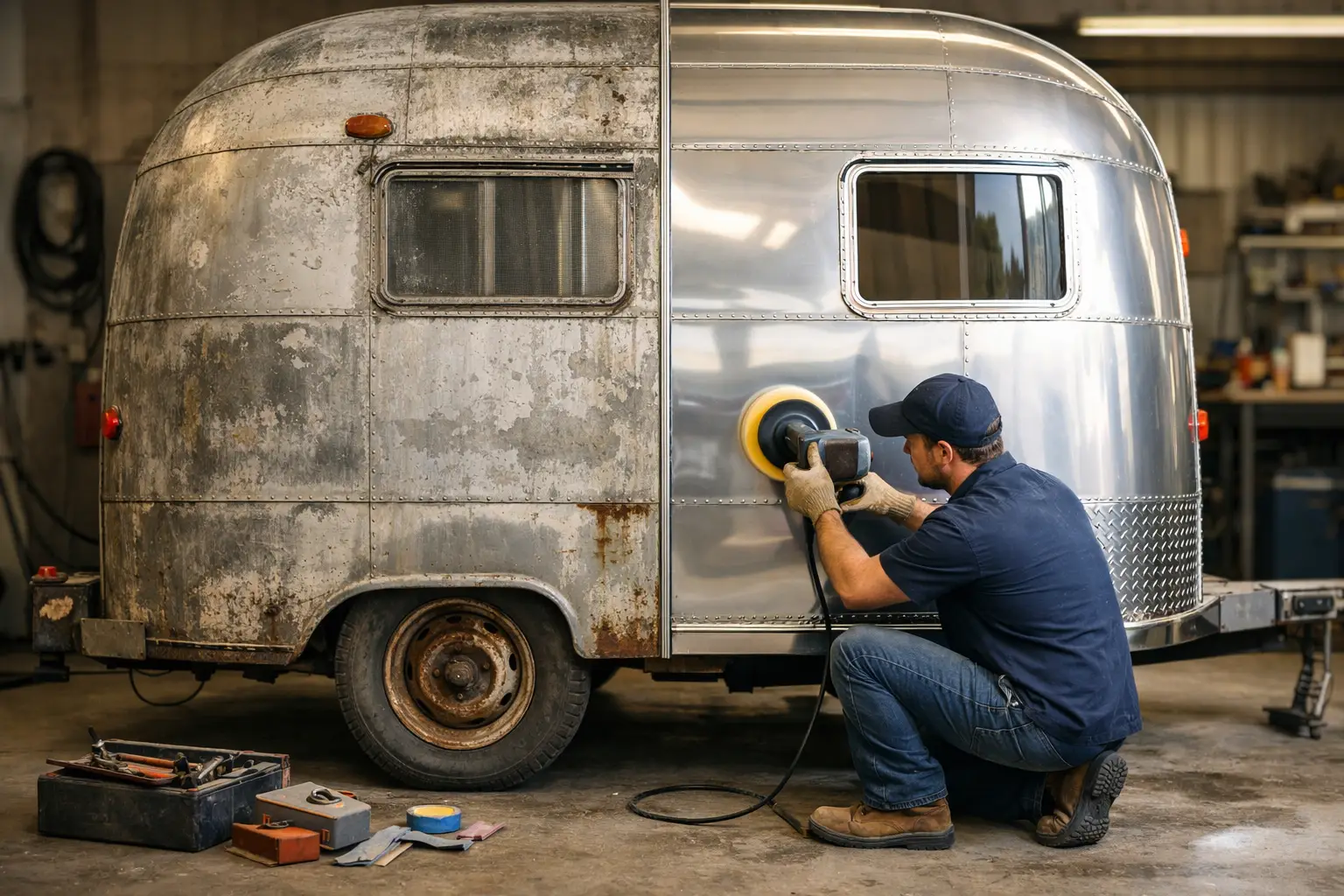
A trailer can look tired long before it is finished. Peeling paint, surface rust, bent hardware, worn decking, and old wiring make it easy to write off an otherwise solid utility, equipment, boat, or flatbed trailer. Knowing how to restore trailers starts with separating cosmetic wear from problems that affect safety, load capacity, and roadworthiness.
A proper restoration is not just a paint job. The finish matters, but the work underneath it matters more. If rust is left in seams, cracks are painted over, or a clean surface sits uncoated for too long, the same issues will return quickly. A deliberate plan helps you spend money where it counts and avoid rebuilding parts that are still serviceable.
Start by Inspecting the Trailer From the Frame Up
Before ordering paint or replacement parts, clean the trailer enough to see what you are dealing with. Remove loose cargo, old tie-downs, floor mats, and debris trapped in corners. A pressure wash can remove mud, salt, and grime, but it will not expose every problem hidden under old coatings.
Inspect the frame rails, crossmembers, tongue, coupler area, spring hangers, axle mounts, and ramps. Look closely at welds and at places where two pieces of steel meet. These areas hold moisture and are common starting points for corrosion.
Surface rust is usually manageable. Deep scaling, holes in structural steel, severe pitting around suspension mounts, or cracked welds need a closer look. A trailer that carries equipment or commercial loads should not be repaired based on appearance alone. Have a qualified welder or trailer repair professional assess any damage that affects the frame, tongue, axles, brakes, or load-bearing components.
Check the mechanical systems while the trailer is unloaded. Test the lights, inspect the wiring harness, examine tires for dry rot, and spin each wheel. Wheel bearings, brakes, breakaway systems, safety chains, couplers, jacks, and reflectors are not restoration details - they are the parts that get the trailer safely to the job site and back.
Make a Restoration Plan Before You Strip Anything
The best scope depends on the trailer’s use. A light utility trailer used for occasional yard work may need basic rust removal, fresh paint, new lights, and a treated wood deck. A commercial equipment trailer may justify axle service, new brakes, upgraded tie-downs, heavy-duty coating, and replacement decking.
Set priorities in this order: structural condition, running gear and safety equipment, surface preparation, coating, then appearance. This keeps a project from becoming a cycle of rework. For example, there is little value in refinishing fenders before repairing a cracked bracket or replacing old wiring routed behind them.
It also helps to decide whether the trailer will be restored in sections or fully disassembled. Removing the deck, lights, ramps, fenders, hardware, and removable brackets creates better access for repairs and coating. It takes more time upfront, but it produces a cleaner result than masking around every obstacle.
Strip Rust and Failing Coatings Properly
This is where many trailer restorations either hold up or fail early. Wire wheels, grinders, and sanding discs can handle small areas, but they are slow on a full frame and often miss pits, corners, seams, and irregular surfaces. They can also leave behind rust or weak paint that looks acceptable until the new coating begins to lift.
Abrasive blasting is often the right choice when a trailer has widespread rust, peeling paint, mill scale, or old coating that needs to come off completely. The goal is not simply to make the steel look clean. The goal is to create a sound, properly profiled surface that gives primer and paint something reliable to bond to.
The blasting method and media should match the material and condition of the trailer. Steel frames can usually handle more aggressive preparation than thin fenders, aluminum components, or delicate identification plates. An experienced blasting provider will account for those differences rather than treating every part of the trailer the same.
Do not blast wheel bearings, brake assemblies, electrical components, or parts that should be removed and serviced separately. Protect identification numbers and labels when required. If you are restoring a galvanized trailer, keep in mind that coating adhesion and repair methods can differ from standard painted steel.
At Gorilla Sandblasting, the focus is on preparing durable surfaces for the next step, whether that is repair, primer, paint, or a protective coating. For trailer work, clean steel is only the starting point. Timing and coating selection determine whether that clean surface stays protected.
Prime Quickly After Surface Preparation
Bare steel can begin to flash rust surprisingly fast, especially in damp conditions. Once blasting is complete, blow off dust, keep the trailer dry, and apply the specified primer as soon as practical. Waiting several days because the frame looks clean is a common mistake.
For most steel trailers, an epoxy primer provides a strong foundation for corrosion protection. It adheres well to properly prepared metal and helps seal the surface before the topcoat is applied. Depending on the trailer’s use and the coating system, a high-build primer may also help smooth minor pitting or create a more uniform finish.
Avoid choosing primer and paint as separate, unrelated purchases. Use products that are designed to work together, and follow their recoat windows. A durable coating system is a sequence, not a collection of cans.
Choose a Finish That Matches the Work
Trailer paint has to handle abrasion, road spray, sun, vibration, loading, and impact from tools or equipment. A basic brush-on enamel may be sufficient for a small personal utility trailer that lives under cover. It is affordable, easy to touch up, and practical when appearance is secondary.
For trailers that see regular work, a tougher two-part urethane or commercial-grade coating can provide better durability and color retention. Powder coating can also be a strong option for removable components and certain trailer parts, though it may not be ideal for every large assembled frame or future repair situation.
There is always a trade-off. Higher-performance coatings cost more and require stricter surface preparation and application conditions. A simpler coating system may be easier to repair after a scrape from a skid steer bucket or loading ramp. Choose based on how the trailer is used, stored, and maintained, not just on the shine of the final finish.
Apply extra attention to the underside, crossmembers, ramp hinges, stake pockets, and the back of fenders. These areas take the most abuse and are often the first places where corrosion returns. If the trailer is exposed to winter road salt or launched near water, corrosion protection deserves an even larger share of the budget.
Rebuild the Parts That Make the Trailer Usable
Once the frame is protected, reassemble with function in mind. Replace worn fasteners, damaged breakaway cables, cracked light housings, and corroded connectors rather than reinstalling questionable parts. Route wiring through protected areas and use proper clips so it does not sag or rub against moving components.
If the trailer has a wood deck, inspect every board and the steel supports beneath it. Replace soft, split, or badly checked boards, and use suitable exterior-rated lumber and fasteners. Leave appropriate drainage space between boards so water does not stay trapped against the frame.
Inspect ramps and gates carefully. Hinge pins, latch points, springs, and mesh often need attention after years of use. A ramp that looks solid but does not latch securely can become a serious problem on the road.
Before loading the trailer, verify tire pressure, wheel torque, light operation, brake function, coupler engagement, and safety chain condition. If you replaced axles, suspension, or major structural components, confirm alignment and load rating before putting the trailer back into service.
Protect the Restoration From the First Day
A restored trailer still needs regular attention. Wash off mud, fertilizer, road salt, and standing debris. Touch up chips before moisture reaches bare steel. Lubricate hinges, couplers, and moving ramp parts, and inspect the underside at least once or twice a year.
Storage matters as much as maintenance. Keeping the trailer on well-drained ground, clearing leaves from the deck, and avoiding long periods with wet cargo on board can extend the life of the restoration. A cover can help in some situations, but it should not trap moisture against the trailer.
The strongest trailer restorations are built around preparation, not shortcuts. Fix what carries the load, remove what is failing, protect the bare metal quickly, and maintain the areas that take the hardest use. That approach gives an old trailer a second working life instead of a short-lived new appearance.