
A rusty gate, peeling patio furniture, or flaking trailer frame rarely fails overnight. Damage usually starts where moisture sits unnoticed: under chipped paint, inside joints, around fasteners, and along the bottom edges of metal exposed to soil or standing water. Consistent outdoor metal maintenance stops small surface problems from becoming costly repairs, replacement projects, or safety concerns.
The goal is not to keep every surface looking brand new. It is to keep water, salt, dirt, and oxygen from reaching bare metal long enough to cause corrosion. That takes regular inspection, practical cleaning, prompt touch-ups, and proper surface preparation when the existing coating has reached the end of its life.
Start With the Conditions Around the Metal
Not all outdoor metal ages at the same rate. A powder-coated aluminum chair on a covered deck needs different care than a steel fence near a busy road, a boat trailer exposed to saltwater, or industrial equipment stored outside through wet winters.
Moisture is the main concern, but it is not the only one. Road salt, coastal air, fertilizer, animal waste, wet leaves, and mud can all hold moisture against a surface or create conditions that speed up corrosion. Metal that touches the ground, sits beneath dripping rooflines, or has narrow seams is especially vulnerable.
During a quick walk-around, look beyond the obvious orange rust. Paint bubbles, chalky coatings, discoloration around bolts, rough patches, cracked caulking, and water collecting in corners can all signal a coating problem. Check the underside of trailers, outdoor stairs, railings, gates, equipment frames, and metal furniture. Those areas often take the most abuse and receive the least attention.
A seasonal inspection is enough for many household items. Equipment, fleet assets, coastal property, and heavily used commercial metalwork may need more frequent checks. The right schedule depends on exposure and the cost of downtime if an asset needs repair.
Clean Before Dirt Becomes a Corrosion Layer
Cleaning does more than improve appearance. It removes the contaminants that keep surfaces damp and make coatings break down faster. A gentle rinse followed by mild soap and a soft brush is often sufficient for painted, powder-coated, galvanized, or aluminum surfaces.
Avoid treating every stain with the strongest cleaner available. Aggressive acids, harsh abrasives, and stiff wire brushes can scratch a protective coating or damage soft metals. Pressure washing can be useful, but keep the spray moving and avoid forcing water into seams, bearings, electrical components, or loose coating edges.
After washing, allow the metal to dry completely. This matters before applying touch-up paint, but it also makes inspection easier. Wet metal can hide peeling paint and early corrosion. Clear debris from drain holes, horizontal ledges, and the bottoms of posts or frames so water has somewhere to go.
For equipment and trailers, cleaning after exposure to mud, salt, or chemical residue is usually more valuable than an occasional deep clean. Letting contaminants sit through a wet season gives corrosion more time to work beneath the finish.
Treat Small Coating Failures Quickly
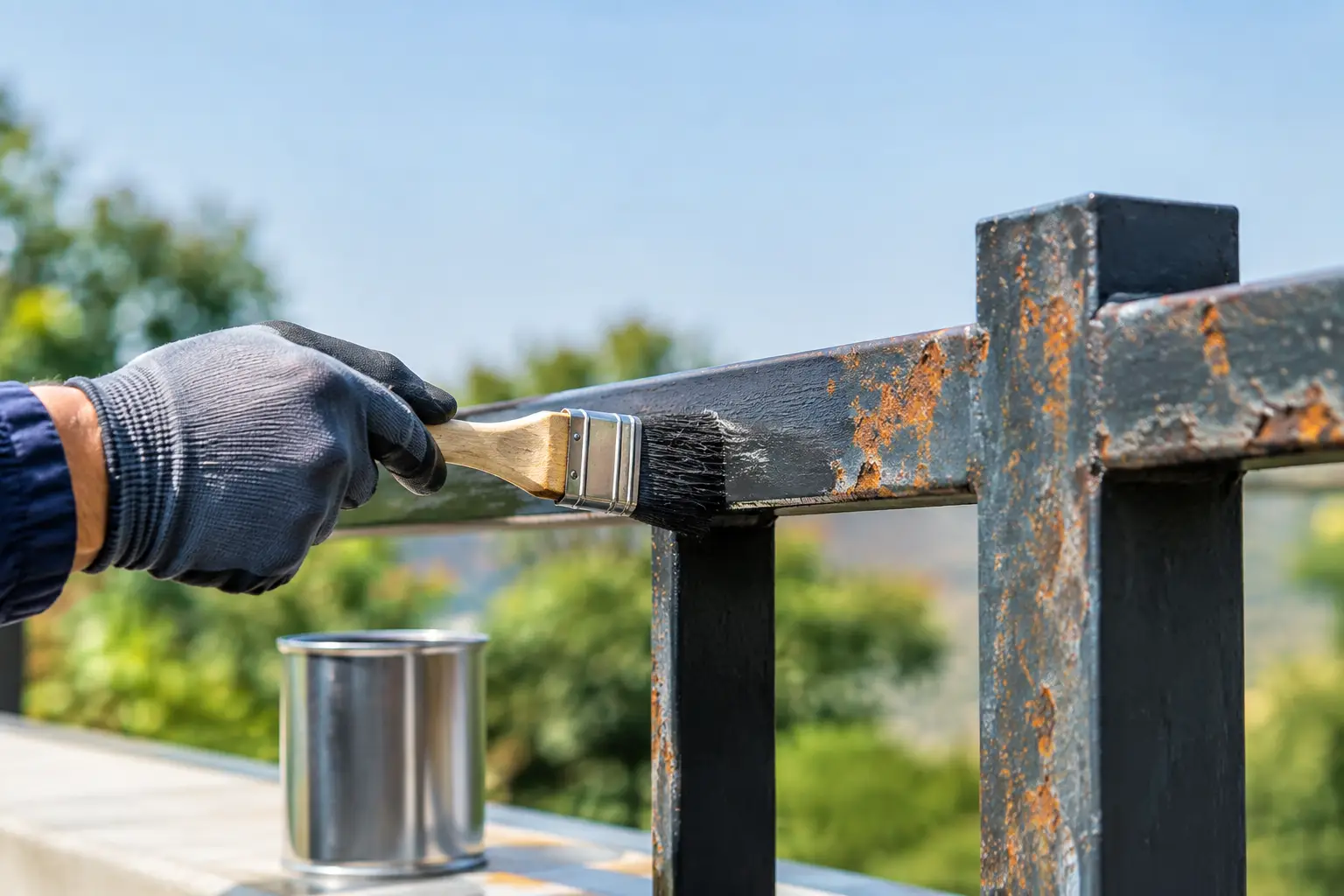
A small paint chip may look minor, but it exposes metal to moisture. Once rust starts beneath a coating, it can spread farther than the visible damaged area. Early touch-up work is usually simple. Delayed repair often means removing a larger section of failed paint and dealing with deeper pitting.
For a small, isolated spot, remove loose paint and surface rust with an appropriate hand tool or abrasive pad. Feather the sound coating around the repair so there is no sharp edge where water can get underneath. Wipe away dust and contamination, let the area dry, then use a compatible primer and topcoat.
Compatibility matters. A coating system works as a system, not as a collection of products chosen by color. The primer must suit the metal and the topcoat must suit the primer. Galvanized steel, aluminum, bare steel, and previously painted surfaces can each require a different approach. If you do not know what coating is already on the item, test a small inconspicuous area or get guidance before committing to a full repaint.
Touch-up paint is best for limited damage. It is not a reliable solution when rust is widespread, paint is lifting across multiple areas, or the surface has deep scale. In those cases, the problem is no longer a paint problem alone. It is a surface-preparation problem.
When Outdoor Metal Maintenance Requires Blasting
Wire brushing and sanding can handle minor corrosion, but they have limits. They can be slow on large areas, struggle to reach tight profiles, and may leave behind rust in pits, seams, and textured surfaces. Applying a new coating over remaining scale or unstable paint usually leads to another early failure.
Abrasive blasting removes old coatings, corrosion, mill scale, and embedded contaminants while creating a clean surface profile for the next coating. It is often the right choice for steel railings, gates, trailers, machinery, metal furniture, structural components, and restoration projects where a durable finish matters.
The blasting media and pressure should match the substrate and the project goal. Heavy steel can tolerate a more aggressive approach than thin sheet metal, delicate antique pieces, or softer metals. Using too much pressure on thin material can cause warping. Using the wrong media can leave a surface too rough, too smooth, or contaminated for the coating that follows.
That is why professional surface preparation is not simply about making metal look clean. It is about removing failure points without damaging the asset, then leaving the right foundation for paint, powder coating, repair, or corrosion protection. Gorilla Sandblasting works with customers who need that clean starting point before the next stage of restoration.
Choose Protection Based on Exposure
Once metal is properly prepared, it needs protection promptly. Bare steel can begin to flash rust quickly in humid conditions, sometimes within hours. The best coating plan depends on whether the item is decorative, structural, mobile, near saltwater, exposed to chemicals, or subject to regular impact and abrasion.
For many exterior steel projects, a quality corrosion-resistant primer followed by a durable exterior topcoat is a practical choice. The coating should be applied at the recommended thickness and within the manufacturer’s recoat window. Thin paint coverage, missed edges, and poor drying conditions are common reasons a fresh finish fails sooner than expected.
Galvanized metal and aluminum need special attention because ordinary paint may not adhere well without proper cleaning and compatible primer. Powder coating can provide a durable finish for suitable removable items, but it still requires proper preparation and can be difficult to touch up invisibly after damage. Galvanizing offers excellent corrosion resistance for many steel applications, though cut edges, welds, and damaged sections may need additional protection.
There is no single best finish for every job. A decorative patio chair, a work trailer, and a commercial handrail live very different lives. Choose the coating system based on actual exposure, expected wear, maintenance access, and the consequences of future failure.
Prevent Water From Getting Trapped
The most durable paint system can still struggle if the design traps water. Before repainting or restoring outdoor metal, look for changes that can improve drainage and reduce moisture contact.
Keep steel components out of direct contact with soil where possible. Repair missing caps on fence posts and railings. Open blocked drain holes in tubular frames. Replace failed sealant around metal-to-masonry connections, but do not seal a cavity in a way that traps water inside. If a gate, railing, or equipment frame has a recurring rust line at the bottom, investigate the source of moisture instead of repainting the same area every year.
Fasteners deserve attention too. Corrosion often begins where dissimilar metals meet or where a bolt head damages the surrounding coating. Replace severely corroded fasteners, use compatible materials where practical, and touch up disturbed coating after repairs. For working equipment, lubricate hinges, latches, and moving joints as recommended so wear does not grind away protective finishes.
Build Maintenance Into the Calendar
The most effective plan is one that actually gets done. Tie inspections to seasonal tasks such as spring cleanup, fall storage, or servicing equipment before heavy use. Wash off salt and grime, clear drainage points, look closely at high-wear areas, and address coating damage before wet weather arrives.
Large restoration work is easier to plan when corrosion is caught early. If peeling paint or scale is spreading, schedule surface preparation before the metal has lost thickness or a project becomes urgent. Clean, stable metal gives every repair and coating a better chance to last.
Outdoor metal does not need constant attention, but it does need timely attention. A few practical checks each year can keep a railing secure, equipment working, and a restored finish looking like it was worth the effort.