
Fresh hot-rolled steel can look clean while carrying a hard, dark layer that works against every finish applied over it. To remove mill scale from steel properly, the goal is not simply to make the metal look brighter. It is to create a clean, sound surface that gives primer, paint, powder coating, or another protective system a dependable place to bond.
Mill scale is common on structural steel, fabricated parts, pipe, plate, trailers, equipment components, and other hot-rolled materials. It can be thin and tightly attached or thick, cracked, and already lifting at the edges. The right removal method depends on the size of the job, the required finish, the steel condition, and what will be applied afterward.
What Mill Scale Is and Why It Causes Problems
Mill scale forms when steel is heated during manufacturing and reacts with oxygen in the air. As the steel cools, a dark gray, blue-black, or brownish oxide layer develops on the surface. It is harder than ordinary rust, which is why a wire brush or light sanding often leaves much of it behind.
Intact mill scale may seem protective, but it is not a reliable base for a long-term coating. It can crack, chip, or separate from the steel as moisture enters through small breaks. When that happens, corrosion begins beneath the scale or coating, and the finish can peel away in sheets.
This matters most on assets exposed to rain, road salt, condensation, chemicals, abrasion, or outdoor storage. A steel railing, truck body, piece of farm equipment, or fabricated structural component may look acceptable after a quick repaint, yet fail early because the underlying scale was never fully addressed.
How to Remove Mill Scale From Steel: Choose the Method First
There is no single method that fits every project. The best choice comes down to surface area, accessibility, profile requirements, cleanup limits, and the condition of the steel.
Abrasive blasting for complete surface preparation
Abrasive blasting is usually the most effective option for removing mill scale across large areas or on steel with welds, corners, pits, and irregular shapes. Properly selected blasting media strips the scale, removes loose corrosion, and creates an anchor profile that helps coatings adhere.
This is often the practical choice for equipment frames, structural members, tanks, trailers, gates, industrial parts, and restoration work. It reaches areas that are difficult to clean consistently with grinders or hand tools. It is also faster on substantial projects when compared with manual methods.
The finish can be adjusted to suit the coating system. Some paints need only a clean, lightly profiled surface, while high-build industrial coatings may require a more defined profile. Blasting should be matched to the steel thickness and intended finish. Aggressive media or poor technique can damage thin metal, round sharp details, or leave an unsuitable profile.
Once blasting is complete, the clean steel should be primed or coated promptly. Bare steel can begin flash rusting quickly in humid conditions, especially near coastal areas or during wet weather.
Grinding and sanding for small or localized areas
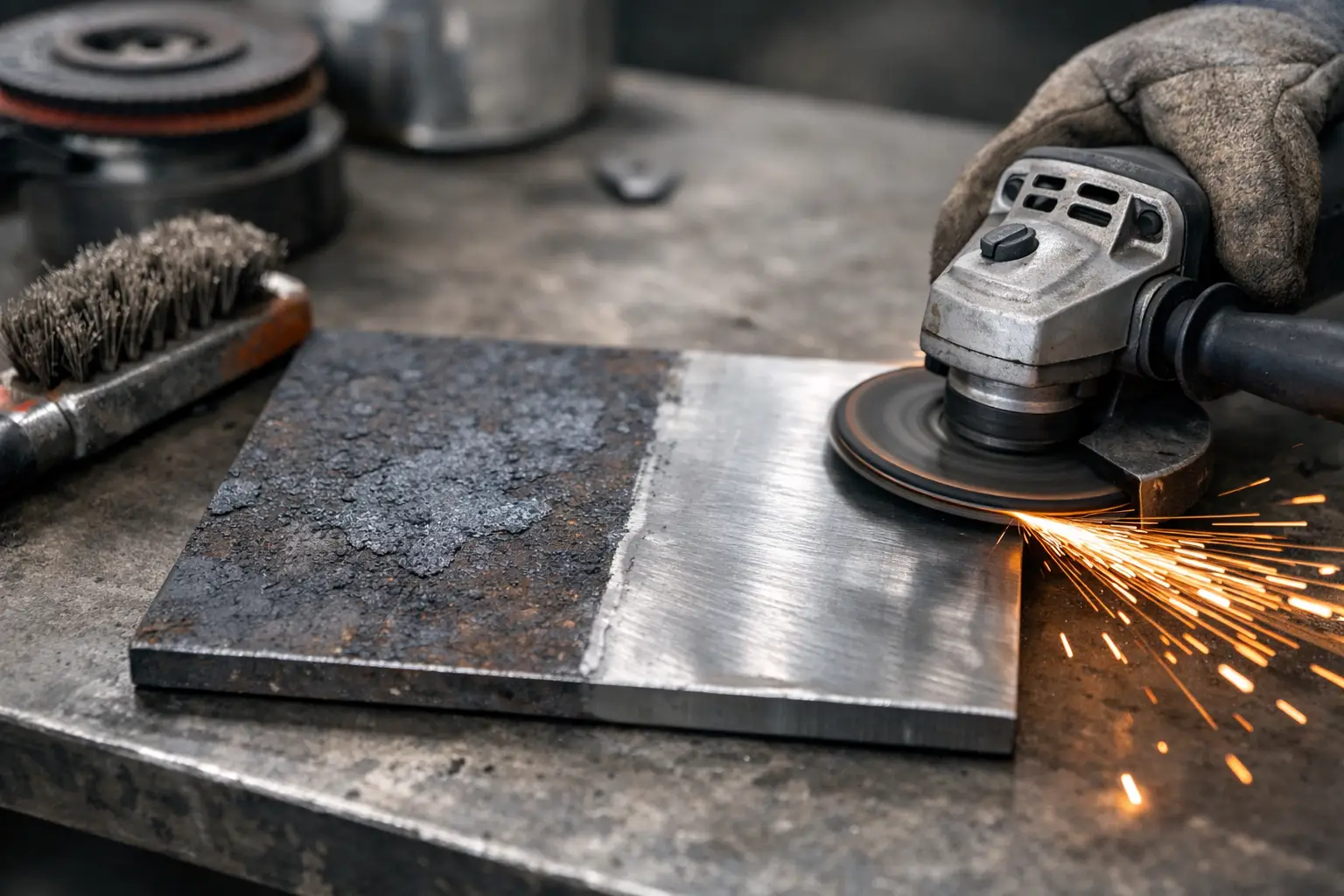
Angle grinders, flap discs, sanding discs, and needle scalers can remove mill scale from small sections of steel. This approach can make sense for a minor repair, a small fabricated piece, or an area where blasting is not feasible.
The limitation is consistency. Grinding tends to clean flat, accessible areas well but can miss weld edges, corners, pits, and tight angles. It may also polish the surface too smooth if the wrong abrasive is used, reducing the mechanical grip available to a coating.
For localized work, start with an abrasive aggressive enough to break through the scale, then finish with a surface texture appropriate for the primer or paint. Remove all dust and residue before coating. A surface that feels smooth is not necessarily free of scale.
Chemical removal for controlled applications
Acid pickling can dissolve mill scale and rust, producing a clean steel surface without heavy grinding. It is commonly used in controlled shop processes and can be useful on certain small parts, intricate shapes, or pieces that need a uniform chemical clean.
However, chemical cleaning is not a casual do-it-yourself shortcut. Acids require correct handling, ventilation, containment, neutralization, rinsing, and disposal. Poor rinsing can leave residues that interfere with coatings or promote corrosion. Hydrogen-related damage can also be a concern with certain high-strength steels.
For most property and equipment projects, chemical methods are best left to qualified operators with the right process controls. If the steel is large, installed, or near landscaping, drains, concrete, or other sensitive surfaces, abrasive blasting or mechanical preparation is often the more manageable option.
Prepare the Steel Before Removal Starts
Mill scale removal works better when surface contaminants are dealt with first. Oil, grease, cutting fluid, silicone, and heavy dirt can clog abrasives or smear across the surface during grinding. Clean these contaminants before beginning mechanical or abrasive work.
Inspect the steel for loose paint, layered rust, weld spatter, sharp edges, and damaged areas. If old paint is present, do not assume it is harmless. Older coatings can contain hazardous materials, and the removal process should be planned accordingly.
The surrounding area also needs attention. Blasting and grinding create airborne dust and debris, while coatings need a clean environment for application. Protect nearby vehicles, glass, landscaping, finished surfaces, and air intakes. On commercial or occupied properties, containment and cleanup are part of doing the job correctly, not an afterthought.
Know When the Scale Is Actually Gone
The steel should have a generally uniform appearance after proper removal. Depending on the chosen method, it may look light gray, matte silver, or evenly textured rather than shiny. What matters is that no dark, tightly bonded patches of scale remain in the coating area.
Look closely around welds, corners, bolt holes, seams, and pitted areas. These locations often hold scale and corrosion after the broad surface appears clean. A professional surface-preparation job pays attention to these details because coating failures frequently start at edges and difficult geometry.
If you are working toward a specified coating system, follow the paint manufacturer's requirements for cleanliness and surface profile. A product designed for lightly prepared steel may not perform over a surface intended for a high-performance industrial primer, and the reverse can also be true. The coating and the preparation method should be treated as one system.
Coat the Steel Before Moisture Gets In
After mill scale removal, avoid touching the steel with bare hands. Skin oils can affect adhesion, particularly on small parts and finish-sensitive work. Blow off or vacuum remaining dust, then use the recommended cleaning method for the coating system.
Apply primer as soon as practical after preparation. If the steel sits overnight in damp air, it may need to be cleaned again before coating. Even a thin layer of flash rust can weaken the final result, especially under epoxy, urethane, or other durable protective coatings.
For equipment, railings, gates, trailers, and structural work, the extra effort spent on preparation is usually where the service life is won or lost. A quality finish cannot compensate for unstable scale beneath it.
When Professional Blasting Makes More Sense
Small steel items can sometimes be handled with a grinder and careful cleanup. Larger, heavily scaled, awkward, or high-value work is different. Professional blasting is often the better route when the project needs consistent results, controlled containment, efficient turnaround, and a surface ready for coating.
Gorilla Sandblasting helps prepare steel surfaces for restoration, repair, and protective finishes by removing stubborn scale, rust, and failed coatings. The right approach is based on the asset, the condition of the steel, and what needs to happen after cleaning.
If mill scale is standing between your steel and a finish that needs to last, treat surface preparation as part of the project itself. Clean, properly profiled steel gives every next step a stronger foundation.