
A rusty trailer frame, steel gate, piece of equipment, or patio furniture can look beyond saving long before it actually is. To remove rust from metal, sandblasting provides the fast, thorough surface preparation that wire brushes, sanding discs, and chemical cleaners often cannot match. The real value is not simply making metal look clean. It is creating the sound, properly profiled surface needed for a repair, primer, paint, powder coating, or corrosion-control system to hold.
How Sandblasting Removes Rust From Metal
Rust is iron oxide, but it is rarely limited to the reddish-brown layer you can see. Corrosion works into pits, seams, edges, welds, and areas beneath peeling paint. A hand tool may clean the high spots while leaving oxidation in those difficult areas. That remaining rust can keep spreading under a fresh coat of paint.
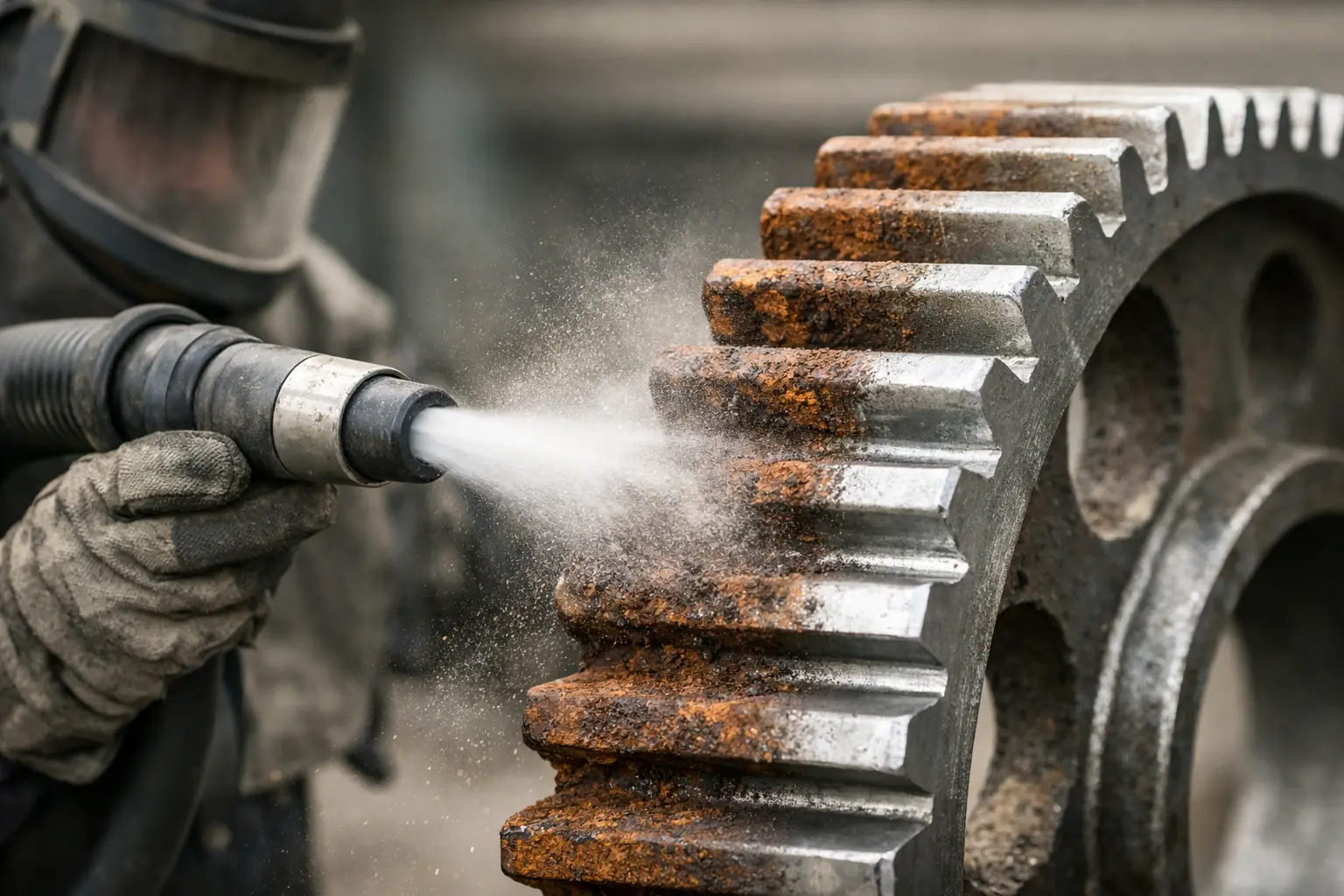
Abrasive blasting propels a selected media against the surface at high speed. The impact breaks away loose rust, mill scale, old coatings, and embedded contamination. It also reaches contours and tight geometry far more consistently than manual sanding. Once blasting is complete, the metal is exposed so its actual condition can be assessed.
This matters when a project has more than light surface rust. Blasting can reveal pitting, thin areas, cracked welds, old repairs, or corrosion that requires attention before refinishing. Finding those issues early is better than covering them with paint and discovering the problem after the asset is back in service.
When Sandblasting Is the Right Choice
Sandblasting is often the practical choice when rust covers a large area, when old paint is failing, or when the metal needs a dependable finish rather than a temporary cosmetic improvement. It is commonly used for equipment parts, trailers, railings, structural steel, vehicle components, tanks, gates, machinery, and restoration projects.
It is especially useful when several surface problems exist at once. A steel item may have rust, thick paint, grease residue, mill scale, and uneven patches from past touch-ups. Trying to remove each layer by hand takes time and can create an inconsistent result. Blasting addresses the surface as a complete preparation job.
That does not mean every rusty item needs aggressive blasting. A small area of light rust on a thin decorative panel may be better handled with a gentler method. The right approach depends on the metal thickness, the item’s shape, its current coating, the desired finish, and whether it will be painted or powder coated afterward.
The Abrasive Media Matters
“Sandblasting” is commonly used as a general term, but professional blasting does not always use sand. The abrasive media is chosen based on the material and the goal of the project. Some media cuts quickly through heavy rust and coating. Other media is better suited to more delicate parts or surfaces where preserving the base metal is a priority.
For heavy steel components, an aggressive abrasive may be needed to remove scale and corrosion efficiently while creating a surface profile for primer. For thinner metal, automotive panels, aluminum, or detailed parts, excessive force or the wrong media can cause damage, distortion, or an overly rough finish.
The desired coating also affects media selection. Many protective primers and industrial coatings need a defined anchor pattern to bond correctly. A surface that looks clean but is too smooth may not provide the adhesion the coating manufacturer expects. On the other hand, an overly rough profile can use more paint and may show through a finish coat.
A professional assessment accounts for both sides of the job: getting the rust off and leaving the surface ready for what comes next.
What Happens Before and During Blasting
Good results begin before the equipment starts. Heavy grease, oil, silicone, and thick buildup may need to be removed first. Abrasive blasting is highly effective at stripping corrosion and coatings, but oily contamination can be pushed around rather than fully removed if it is not addressed properly.
The item also needs to be evaluated for areas that should not be blasted. Threads, machined surfaces, bearings, glass, seals, electrical components, and delicate trim may require masking, removal, or a different cleaning method. This preparation prevents unnecessary damage and keeps the job focused on the surfaces that need restoration.
During blasting, the operator adjusts technique according to the material. Distance, pressure, nozzle angle, dwell time, and media type all influence the result. The goal is not to blast as aggressively as possible. The goal is to remove contamination efficiently while maintaining control over the underlying metal.
For large or complex assets, access matters as much as technique. Rust often concentrates on undersides, corners, joints, and water-trapping areas. If these locations are missed, they can become the starting point for another coating failure. Thorough preparation means treating the hard-to-reach areas with the same care as the open panels.
Clean Metal Needs Protection Quickly
Once rust is removed, bare steel is highly vulnerable. In humid conditions, flash rust can form surprisingly fast, sometimes within hours. The surface may still appear mostly clean, but a light orange film can interfere with coating adhesion and reduce the life of the finish.
The best plan is to coordinate blasting and coating as closely as possible. After the surface is blown clean and inspected, apply the appropriate primer within the recommended window. The exact timing depends on the environment, substrate, coating system, and specification, but waiting several days with bare metal exposed is rarely a good strategy.
For outdoor metal, coating selection should match the service conditions. A decorative railing and a work trailer do not face the same wear. Equipment used around moisture, road salt, chemicals, abrasion, or coastal air may need a more durable primer and topcoat system than an item kept indoors.
Pay close attention to seams, welds, bolt heads, corners, and drainage points. These are common locations for water to collect and corrosion to return. A quality coating system, applied over correctly blasted metal, gives these vulnerable areas a much better chance of lasting.
Common Mistakes That Shorten the Life of a Refinish
The most common mistake is treating blasting as the entire restoration. Blasting is the foundation, not the finish line. Leaving cleaned steel uncoated, applying paint over dust, or using the wrong primer can undo a great deal of preparation work.
Another issue is blasting without a clear plan for the final use of the item. If a part needs a smooth appearance, tight tolerances, or protection for threaded areas, those details need to be considered before work begins. The same is true for thin metal, which may require a more controlled process than a heavy structural component.
Do-it-yourself blasting can also create problems when containment, personal protection, or media selection is overlooked. Abrasive dust can travel, damage nearby surfaces, and create a serious breathing hazard. Old coatings may also contain materials that require careful handling. Professional blasting is not just about having a blast pot. It is about controlling the work area and preparing the surface safely and consistently.
Choosing a Professional for Rust Removal
When you are comparing blasting services, ask what condition the metal is expected to be in after blasting and what preparation is recommended before coating. Clear answers matter more than vague promises to “clean it up.” A capable provider should ask about the substrate, the coating plan, the item’s use, and any areas that need protection.
Gorilla Sandblasting approaches rust removal as part of the larger restoration or maintenance job. Whether the asset is a piece of equipment, metalwork, a trailer, or a structural component, the objective is a clean foundation that makes the next step easier and more durable.
If rust is already visible, it is usually cheaper to address it before it reaches deeper into the metal. Get the surface evaluated, decide how it will be protected afterward, and give the new finish a clean surface worth bonding to.