
Rust removal is not just about making metal look better. Rust keeps spreading beneath loose paint, weakens exposed steel, and can ruin a new finish before it has a chance to do its job. Whether you are restoring a trailer, maintaining commercial equipment, preparing railings, or dealing with structural steel, the goal is the same: get back to a clean, stable surface that can be properly repaired and protected.
The right approach depends on the size of the job, the condition of the metal, and what needs to happen next. Light surface rust on a small part may respond to hand tools and a treatment product. Heavy corrosion, old coatings, flaky scale, and hard-to-reach areas usually require a more complete surface-preparation process.
What Rust Does to Metal
Rust forms when iron or steel is exposed to oxygen and moisture. In a coastal or rainy climate, that process can move quickly, especially where water sits in seams, joints, wheel wells, fasteners, and damaged paint. Road salt, industrial contaminants, and poor drainage make the problem worse.
What appears to be a small orange patch can be more than a cosmetic issue. Rust often grows outward and inward from a damaged area, lifting paint as it expands. Once paint is no longer bonded to the metal, moisture gets underneath it. The visible damage can be only part of the problem.
For equipment owners and property managers, waiting usually increases the scope of work. A rusty gate may still be repairable with cleaning and recoating. A gate with deep pitting, thinning steel, or failed welds may need metal repair before it can be finished. Early action protects both the asset and the budget.
Rust Removal Starts With an Honest Surface Check
Before choosing a method, look closely at the condition of the surface. The question is not simply, “Can the rust come off?” It is, “What condition will the metal be in after it comes off?”
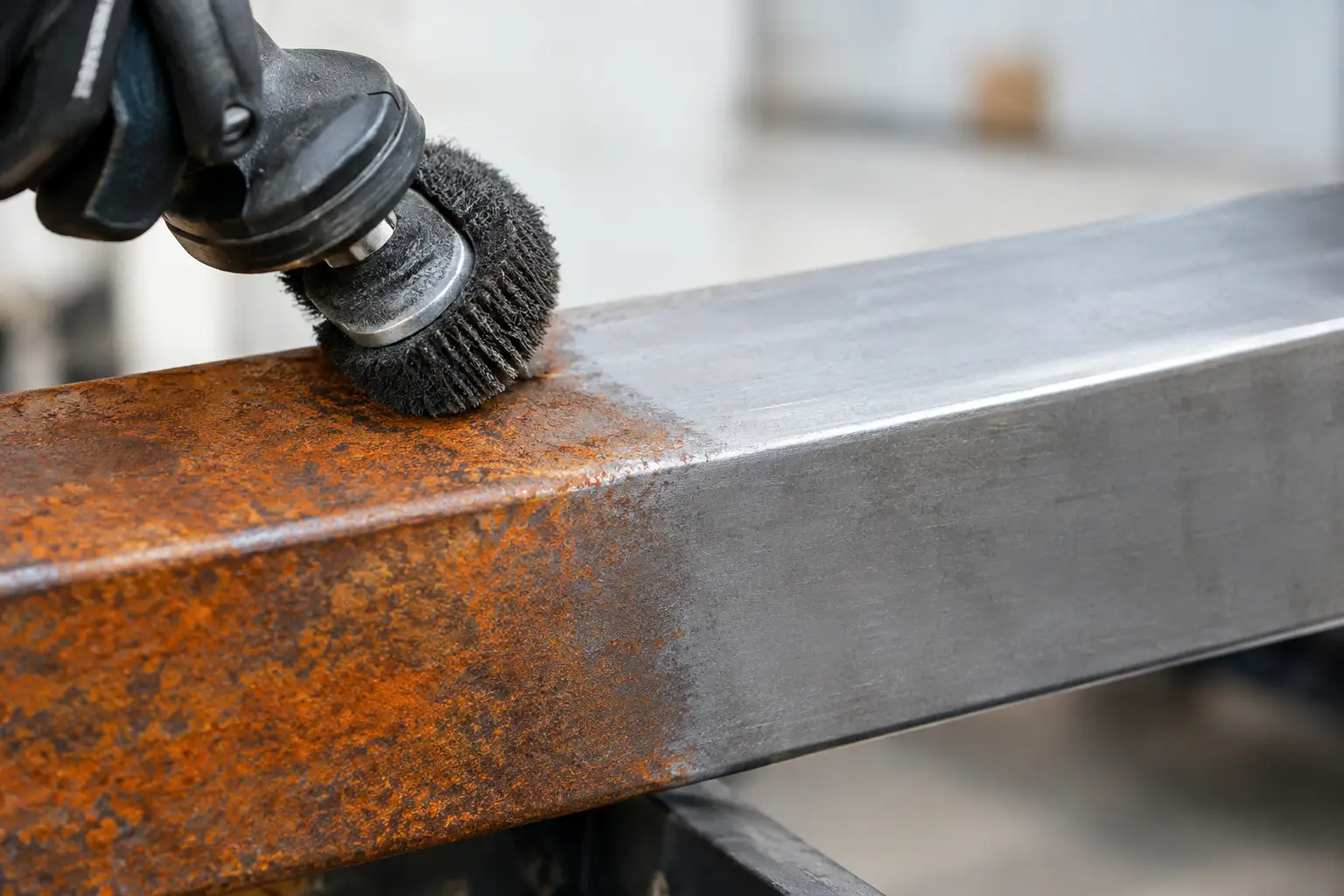
Light surface rust is generally limited to the top layer and has not significantly eaten into the material. It may be suitable for mechanical cleaning, sanding, wire brushing, or a chemical treatment when the area is small and accessible. These methods can work well for touch-ups, provided every loose coating edge is feathered and the surface is cleaned before primer.
Moderate to heavy rust calls for more attention. Thick scale, peeling paint, deep pitting, and corrosion around joints are signs that quick spot cleaning may not be enough. The surface needs to be exposed evenly so damage can be assessed and a coating can bond consistently.
Also consider the substrate. Steel, aluminum, cast iron, brick, concrete, and delicate sheet metal do not all tolerate the same blasting media or pressure. A professional evaluates the material and the desired finish before starting work. Aggressive blasting can remove corrosion quickly, but the wrong process can damage thin material or leave a surface profile that does not suit the planned coating.
Why Abrasive Blasting Works for Heavy Rust Removal
Abrasive blasting removes rust, old paint, mill scale, and embedded contamination by propelling abrasive media at the surface. Done correctly, it cleans areas that are difficult to reach with grinders or wire wheels, including corners, welds, textured steel, frames, and complex equipment components.
The major advantage is consistency. Hand tools can polish high spots while leaving rust in pits, seams, and irregular surfaces. Blasting reaches the full surface and reveals the actual condition of the metal. That matters when you need to decide whether a component can be coated, repaired, or replaced.
Blasting also creates a surface profile, often called an anchor pattern, that helps suitable primers and coatings adhere. This is one reason it is commonly used before industrial painting, powder coating, protective coatings, and restoration work. Clean metal alone is not always enough. The coating system needs the correct surface condition to perform as intended.
There are trade-offs. Blasting creates dust and requires containment, safety controls, and the right equipment. Some projects cannot be handled on-site because of nearby finishes, landscaping, vehicles, or local conditions. Mobile service can be practical for large equipment and structural work, while smaller parts may be better handled in a controlled setting. The right setup depends on the job, not a one-size-fits-all process.
Choosing the Right Rust Removal Method
For a small, isolated area with only light oxidation, sanding or wire brushing can be a reasonable solution. Remove all loose material, clean away dust and grease, use a compatible primer, and coat the area promptly. This approach is affordable, but it is labor-intensive and can miss corrosion in tight or uneven areas.
Chemical rust removers and converters can help in specific situations. A remover dissolves rust, while a converter changes the rust into a more stable compound that can be coated. Results depend heavily on surface preparation, product compatibility, and complete coverage. These products are not a substitute for removing heavy scale, loose paint, or deeply packed corrosion.
Grinding is useful for weld preparation, localized repairs, and thick deposits. It is less effective as a complete solution for detailed metalwork, pitted surfaces, and broad areas with failing coatings. Excessive grinding can also remove sound metal or leave uneven marks that show through a finish.
Abrasive blasting is often the practical choice when the project involves extensive rust, multiple coatings, large surface areas, or equipment with complex shapes. It is particularly useful when the next step is a professional coating system and the surface must be uniformly clean. Gorilla Sandblasting approaches this work as surface preparation, not just coating removal, because the finish is only as reliable as the surface beneath it.
The Most Important Step Comes After Cleaning
Freshly cleaned steel is vulnerable. Once rust and coatings are removed, bare metal can begin to flash rust when humidity or moisture reaches it. In some conditions, that can happen quickly. This is why blasting should be coordinated with the next stage of the project instead of treated as an isolated task.
After cleaning, inspect the surface for pitting, cracks, thin sections, failed welds, or contamination that was hidden by paint and rust. Make repairs before the final coating whenever possible. Coating over defects may improve appearance temporarily, but it does not restore lost material or stop a structural issue.
Then apply the specified primer or protective system within the recommended window. The coating choice matters. Outdoor railings, trailers, machinery, marine-adjacent components, and structural steel may require different primers and topcoats based on exposure, use, and expected maintenance. If a part will be powder coated, it should be handled and stored carefully after blasting to prevent contamination before finishing.
Common Mistakes That Shorten Coating Life
The most common failure is painting over loose rust because the surface feels dry or looks mostly clean. Paint cannot bond reliably to unstable material. The rust continues underneath, and the new coating eventually bubbles, flakes, or peels.
Another mistake is cleaning only the visible face of an asset. Rust frequently starts on backsides, underneath edges, inside channels, and around hardware. A thorough inspection should include the places water collects and the surfaces people do not normally see.
Poor timing causes problems too. Leaving blasted steel exposed overnight, handling it with oily gloves, or moving it through a dirty work area can compromise a clean surface. Surface preparation and coating should be planned as connected steps.
Finally, do not confuse a bright finish with a properly prepared finish. A wire wheel can make metal shine while leaving corrosion in pits and pores. The right standard is a clean, stable surface appropriate for the coating and service environment.
Plan for Protection, Not Just Cleanup
A successful rust removal project ends with a plan to keep moisture away from the metal. That may mean repairing drainage, sealing joints, touching up damaged coatings early, washing road salt from equipment, or setting a regular inspection schedule. For commercial assets, routine maintenance is usually less disruptive and less expensive than waiting for corrosion to become a major restoration project.
If you are unsure whether a surface needs spot treatment, repair, or full blasting, start by considering the finish you expect it to support. A clean foundation gives every next step - welding, painting, powder coating, or corrosion control - a better chance to last.