

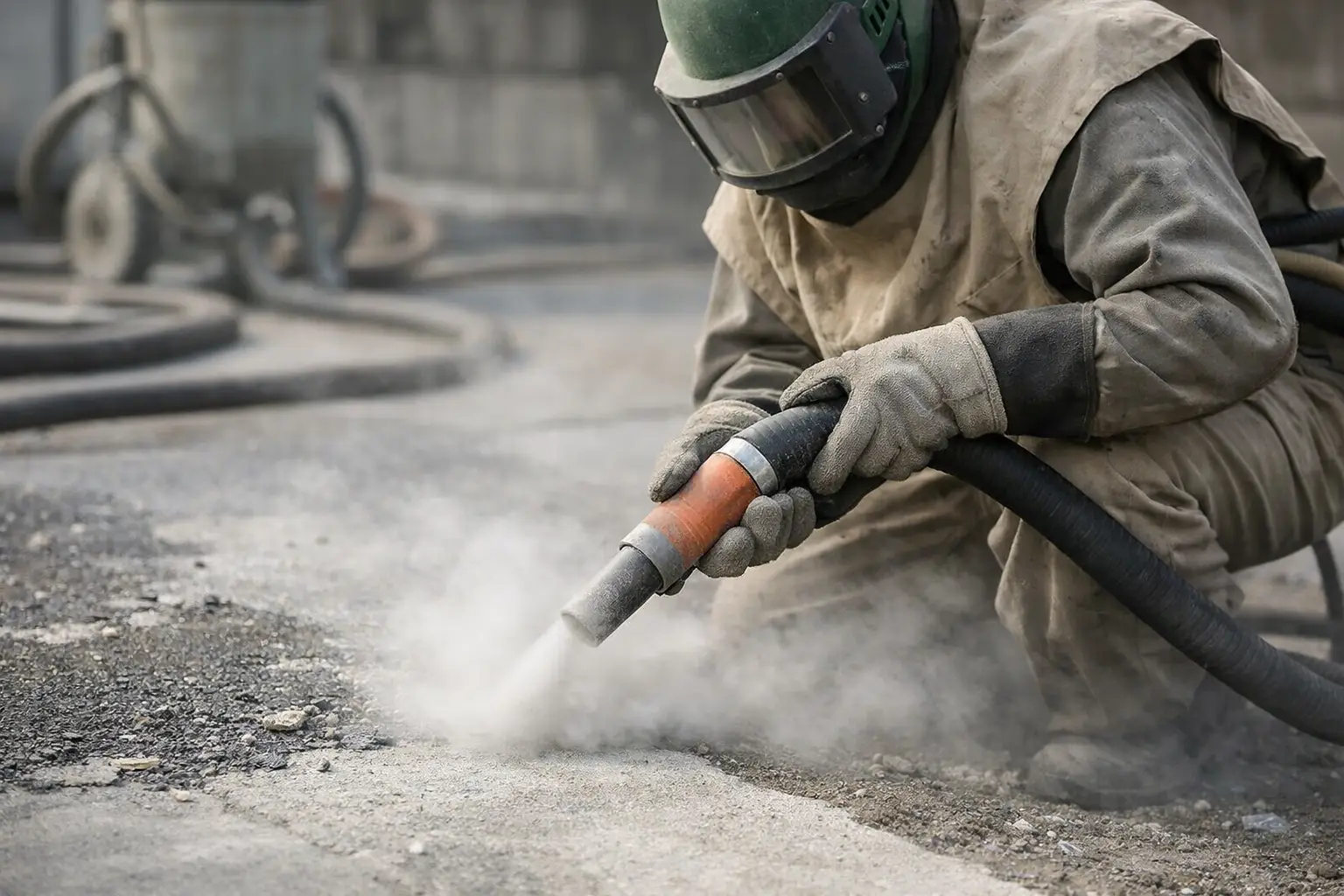
A peeling garage floor, a failed epoxy finish, or old paint on a concrete wall is more than a cosmetic problem. The coating can trap moisture, hide cracks, and prevent a replacement product from bonding correctly. Sandblasting concrete coating removal gives the surface a clean reset when ordinary scraping, washing, or grinding will not get through a stubborn finish.
The goal is not simply to make concrete look bare. Proper removal creates a sound, properly profiled surface that is ready for repair, sealing, painting, or a new protective coating. That outcome depends on the existing coating, the condition of the slab, the blasting media, and the care taken to contain dust and protect surrounding areas.
When Sandblasting Concrete Coating Removal Makes Sense
Concrete coatings fail for different reasons. Some have reached the end of their service life. Others were applied over damp concrete, contaminated surfaces, or a slab that was never prepared correctly. Sun exposure, vehicle traffic, de-icing salts, oil, and repeated freeze-thaw cycles can also break down a coating over time.
Blasting is often a strong option when the coating is thick, tightly bonded in places, and failing in others. It can remove old paint, epoxy, urethane, mastics, sealers, and surface contamination without leaving behind the uneven residue that often comes with hand tools. It is especially useful on larger slabs, textured concrete, retaining walls, commercial floors, loading areas, and exterior concrete with layers of old finishes.
That said, blasting is not automatically the best answer for every slab. A small indoor area may be better suited to mechanical grinding, particularly where dust containment, access, or nearby finishes make abrasive blasting impractical. Thin coatings can sometimes be removed with grinding or stripping methods. The right process comes down to the coating type, its thickness, the location, and what will be applied afterward.
What Blasting Does to the Concrete Surface
Abrasive blasting removes coatings by propelling a selected media at the surface under controlled pressure. It breaks the bond between the old coating and the concrete while also cleaning contaminants from exposed areas. The process can create the surface texture needed for a new coating to grip.
This texture is commonly called a surface profile. A smooth, sealed slab may look clean but still be a poor base for paint or epoxy. New coatings need a stable surface with enough tooth for adhesion. If the profile is too light, the new finish may peel prematurely. If it is too aggressive, the surface may require additional preparation or more coating material to fill the texture.
Concrete is not as uniform as steel. It can contain soft spots, patch repairs, exposed aggregate, weak laitance, and old cracks. An experienced operator adjusts the media, pressure, distance, and technique to remove the finish without needlessly damaging sound concrete. The work should reveal the actual condition of the slab, not create a new repair problem.
The Coating Is Only Part of the Job
Old coatings are often covering issues that need attention before refinishing. Once removal is complete, cracks, spalls, moisture staining, and oil penetration become easier to see. Those conditions should be addressed before a new coating is installed.
For example, a garage slab with active moisture vapor may need a moisture-tolerant coating system rather than a standard epoxy. A concrete wall with cracks may need repairs before painting. Removing the old finish is the necessary first step, but it does not replace a plan for the concrete underneath.
Choosing the Right Media and Method
“Sandblasting” is a familiar name for the process, but professional abrasive blasting does not mean one material is used for every job. The blasting media is selected based on the coating, the substrate, the desired profile, and the work environment.
A harder, more aggressive media may be appropriate for heavy coatings on durable exterior concrete. A less aggressive approach may be better for aging masonry, decorative concrete, or surfaces where preserving detail matters. In some situations, wet blasting or vapor blasting methods can help reduce airborne dust. In others, containment and recovery equipment are necessary to protect adjacent property and keep the work area controlled.
The condition of the concrete matters just as much as the coating. Weak, deteriorated, or badly spalled concrete can break away during any aggressive preparation process. Blasting cannot turn failing concrete into sound concrete. It exposes the true condition so repairs and coating decisions can be made honestly.
Why Surface Preparation Determines Coating Life
Most coating failures begin before the first coat is applied. Paint and epoxy do not bond well to dust, oil, loose material, or glossy sealed concrete. Even a premium product can fail quickly if it is installed over a contaminated or poorly prepared surface.
After blasting, the surface should be inspected for remaining coating, loose concrete, visible contamination, and areas requiring repair. The slab must also be cleaned of blasting residue before the next phase begins. If a new system is going on the surface, follow the coating manufacturer's requirements for surface profile, moisture, temperature, and cure conditions.
This is where a quick removal job and a professional preparation job separate. The fastest-looking approach is not always the one that produces a durable result. When the end goal is a new floor coating, painted wall, waterproofing system, or protective finish, the surface needs to be prepared for that specific product.
Dust, Safety, and Site Protection
Concrete blasting creates dust and debris, including removed coating material. That requires proper planning. Nearby vehicles, windows, landscaping, equipment, and occupied areas need protection. Exterior work may require temporary containment depending on the site, weather, and proximity to neighboring properties.
Respiratory protection is also essential. Concrete dust can contain respirable crystalline silica, and older coatings may have hazards that require special handling. The coating should be evaluated before work begins, particularly on older commercial, industrial, or renovation projects. A professional crew uses appropriate protective equipment and work controls rather than treating abrasive blasting as a simple cleanup task.
Access is another practical consideration. Equipment needs room to operate, and the work area needs to be cleared of items that can be damaged by dust or abrasive rebound. For garages, patios, shop floors, and equipment pads, moving vehicles and stored materials before the crew arrives helps keep the project efficient.
What to Expect From a Concrete Coating Removal Project
A good project starts with an assessment of the surface and the finish you want afterward. The crew needs to know whether the concrete will be repainted, coated with epoxy, repaired, sealed, or left exposed. That information affects the preparation standard.
During the work, old coating is removed in passes until the required surface condition is reached. Some areas may take longer than others because coatings rarely fail evenly. Corners, edges, patches, and heavily used traffic paths often respond differently than the center of a slab.
Once blasting is complete, the surface should be reviewed before any new material goes down. This is the time to identify repairs, verify cleanliness, and make sure the profile suits the planned finish. Rushing directly from removal to coating without checking the slab can waste the value of the preparation work.
A Clean Start for Concrete That Needs to Last
Sandblasting concrete coating removal is a practical way to remove failed finishes and prepare concrete for the next stage of its service life. Done correctly, it provides more than a stripped surface. It gives property owners, contractors, and equipment operators a clear view of what needs repair and a reliable base for a finish that can hold up.
If a coating is peeling, flaking, or preventing a proper repair, start by identifying what is on the concrete and what needs to go back on it. Gorilla Sandblasting can help set the right preparation approach so the next coating has a solid surface to work with.