
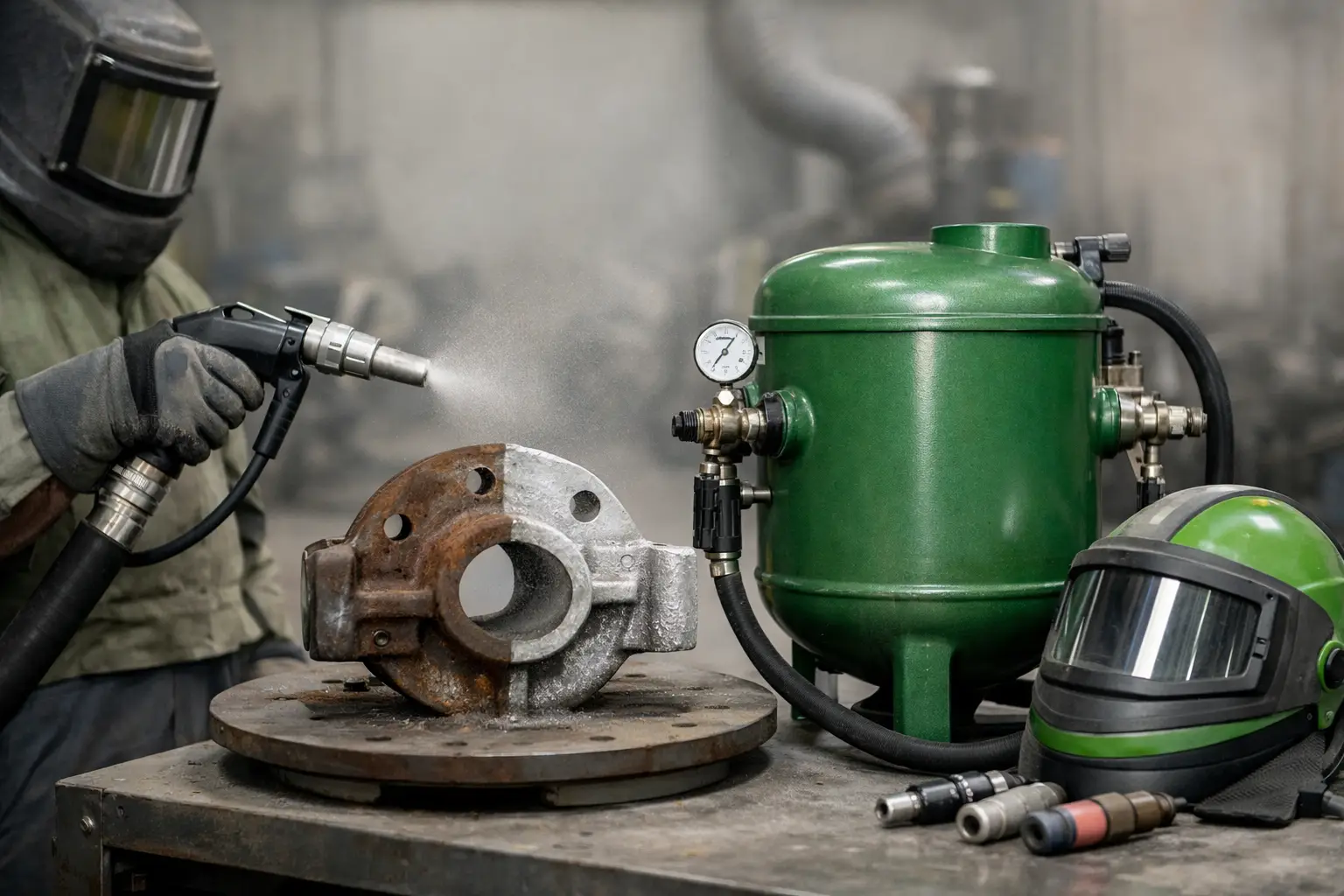
A loader bucket can look beyond saving when rust has lifted the paint, old repairs are buried under grime, and the metal is covered in scale. Often, the asset itself is still sound. Sandblasting equipment restoration strips away the material hiding the true condition of machinery, tools, attachments, and metal components so owners can make the right repair decision.
The goal is not simply to make equipment look cleaner. Proper abrasive blasting creates a surface that is ready for welding, repair, paint, powder coating, or corrosion protection. When the preparation is right, the next step has a much better chance of lasting.
Start With the Equipment's Actual Condition
Restoration starts with an inspection, not with a blast hose. Paint, oxidation, oil residue, and packed dirt can conceal cracks, thin metal, poor prior repairs, and corrosion around seams or fasteners. Removing those layers gives a clearer view of what needs attention and what can be preserved.
Before blasting begins, identify the equipment's construction and purpose. Heavy steel attachments, structural frames, agricultural implements, machine guards, and shop equipment can usually tolerate a more aggressive approach than thin sheet metal, precision parts, or aluminum components. The blasting method must fit the substrate and the desired finish.
A useful inspection also separates parts that should be blasted from parts that should be removed, protected, or replaced. Bearings, seals, hydraulic fittings, electrical connections, glass, rubber hoses, and machined surfaces are not areas to treat casually. Good restoration work protects the components that are meant to stay clean and functional.
Why Sandblasting Equipment Restoration Works
Ordinary washing and wire brushing can remove loose dirt and flaking paint, but they rarely reach corrosion inside pits, corners, welds, and textured surfaces. Abrasive blasting removes failed coatings and corrosion more completely while producing a consistent surface profile for a new coating to grip.
That profile matters. Fresh paint applied over rust, chalking paint, or smooth contaminated metal may look acceptable at first, then peel, bubble, or fail early. Blasting exposes bare material and creates the surface condition needed for primers and protective coatings to bond properly.
For restoration projects, this can change the economics of an asset. A worn trailer frame, piece of shop equipment, excavator attachment, or metal railing may need surface preparation and targeted repair rather than full replacement. It depends on the condition of the base material, but blasting gives owners the information needed to choose with confidence.
Match the Blasting Method to the Job
Not every restoration project needs the same media or pressure. The right choice depends on the material, coating type, corrosion level, location, and finish requirements. A process that works well on thick structural steel may be too aggressive for antique machinery panels or delicate fabricated parts.
Harder abrasive media can remove heavy scale and stubborn industrial coatings efficiently. Finer or less aggressive media may be a better choice where preserving the underlying surface is the priority. The objective is controlled removal, not unnecessary metal loss.
Containment is also part of the plan. Blasting creates dust and dislodges old coatings, so work must be managed with surrounding property, nearby equipment, and cleanup in mind. This is especially relevant for projects near homes, active shops, vehicles, landscaping, or operating commercial spaces.
Heavy Rust and Thick Coatings
Equipment exposed to weather, road salt, moisture, and industrial use often develops layered corrosion beneath old paint. Aggressive surface preparation may be needed to remove scale and reach stable metal. Once clean, the surface should be evaluated promptly for pitting, holes, and areas that require welding or reinforcement.
Aging Paint With Sound Metal Below
When the metal is structurally sound but the coating is failing, restoration can be straightforward. Blasting removes the old paint and surface contamination, leaving a clean base for primer and topcoat. The main challenge is timing: bare steel can begin to flash rust quickly in humid conditions, so coating should follow as soon as practical.
Delicate or Specialized Components
Some equipment should not be fully blasted while assembled. Precision shafts, threads, identification plates, hydraulic systems, and electrical components may need masking, disassembly, or a different cleaning approach. A professional assessment prevents a surface-preparation job from creating avoidable mechanical problems.
Preparation Before Blasting Saves Time Later
The best blasting result begins with basic preparation. Remove loose debris and excess grease where possible. Oil and heavy lubricant can interfere with abrasive action and may spread contaminants across the surface. If a machine has hydraulic leaks or fuel residue, address those concerns before work starts.
Owners should also decide what the equipment needs to become after restoration. Is the plan to repaint it for regular service, prepare it for a repair, sell it in better condition, or protect it before storage? The answer affects how far the work should go and what coating system should follow.
If parts are being repaired, blasting can happen before or after welding depending on the situation. Blasting first exposes cracks and weak areas that need repair. Blasting after welding cleans heat scale, weld discoloration, and surrounding contamination before paint. In many cases, both stages are useful.
The Coating Window Is Part of the Restoration
Blasting is the foundation, not the finish line. Once bare metal is exposed, it needs protection. The correct primer and topcoat depend on the asset's operating environment, expected wear, and budget.
Equipment used outdoors or around moisture needs more protection than a machine kept in a dry shop. A trailer or attachment exposed to road spray, soil, and changing weather may benefit from a more durable coating system than an indoor workbench. There is no single coating that is best for every item.
Surface cleanliness matters just as much as product selection. Before coating, the blasted surface should be free of dust, moisture, fingerprints, and residue. Delaying too long can allow flash rust or new contamination to form, which can compromise adhesion.
For customers who are handling the painting themselves, it helps to schedule the work so primers, materials, and a suitable work area are ready in advance. A clean blasted surface is a valuable starting point. Leaving it exposed for weeks can create unnecessary rework.
Common Restoration Mistakes to Avoid
The most expensive mistake is treating blasting as a cosmetic shortcut. If corrosion has weakened metal, cleaning it will not restore its strength. Blasting may reveal damage that requires repair or replacement, and that is useful information rather than a failure of the process.
Another common problem is blasting around parts that should have been removed or protected. Abrasive media can enter openings, damage seals, and contaminate systems if the work is not planned carefully. Masking and disassembly take time, but they reduce risk.
Painting directly over a freshly blasted surface without checking conditions can also cause trouble. Moisture, dust, and poor timing can undermine an otherwise solid restoration. The final coating should be selected and applied with the equipment's use in mind, not simply because it is available.
When Professional Help Makes Sense
Small, simple parts may be manageable for experienced owners with the right equipment and a safe work area. Larger machinery, fleet assets, structural components, heavily rusted equipment, and projects with difficult coatings usually benefit from professional blasting. The difference is not just speed. It is the ability to select the right method, control the work area, protect sensitive components, and deliver a uniform surface ready for the next trade.
Gorilla Sandblasting works with owners and operators who need a clean, dependable foundation for repair and refinishing. Clear project details, including the equipment type, its condition, and the intended finish, make it easier to determine the right approach before work begins.
A restored piece of equipment does not need to look brand new to be worth saving. It needs a clean surface, sound repairs, and protection suited to the work it still has left to do.