

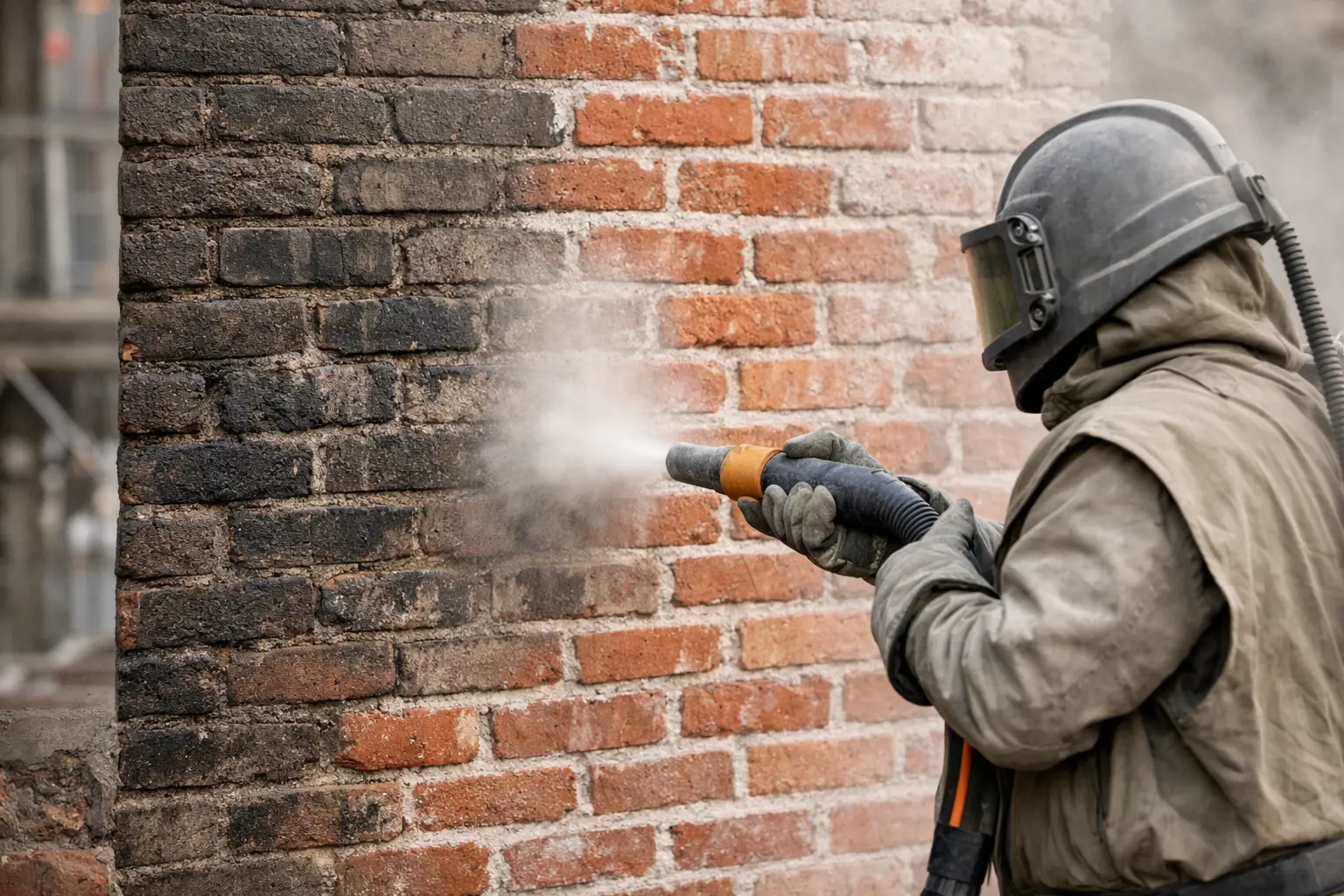
A brick wall can look beyond saving when it is covered in peeling paint, soot, graffiti, mineral staining, or years of ground-in grime. Sandblasting masonry cleaning can strip away those stubborn layers quickly, but it is not a one-setting-fits-all job. Brick, natural stone, concrete block, and mortar joints all react differently under abrasive force. The goal is to remove what does not belong without taking the face off the material underneath.
For property owners, restoration contractors, and facility managers, the decision usually comes down to one question: will blasting restore the surface, or create a more expensive repair? The answer depends on the masonry condition, the coating being removed, and the blasting method selected before work begins.
Why masonry needs a different approach
Masonry is durable, but it is not indestructible. A steel beam can often tolerate aggressive blasting to remove rust and mill scale. Historic brick or soft limestone cannot. High pressure, hard abrasive, or poor nozzle control can erode the fired face of brick, expose porous material beneath it, and leave a rough finish that holds more moisture and dirt than before.
Mortar is another concern. Older mortar is often softer than modern masonry units, particularly on heritage buildings. If blasting cuts too deeply into mortar joints, it can weaken the wall and create the need for repointing. That does not mean abrasive blasting is automatically off the table. It means the process has to be matched to the wall rather than treated like a standard coating-removal project.
The work starts with identifying the substrate. Is the wall hard, sound brick? Is it a soft, hand-made historic brick? Is it cast concrete, split-face block, sandstone, or a mixed surface with patch repairs? A good assessment also looks for cracks, spalling, loose mortar, previous sealers, and signs that moisture has already damaged the masonry.
When sandblasting masonry cleaning makes sense
Abrasive blasting is most useful when contamination is firmly bonded to a stable masonry surface. Common examples include several layers of failing paint, industrial coatings, smoke staining, stubborn graffiti, and heavy surface buildup that ordinary washing cannot remove.
It can also be a practical choice before repair or recoating. If a masonry surface needs a breathable protective coating, patching, or other restoration work, removing loose paint and contaminants creates a cleaner foundation. The finished result is only as reliable as the surface beneath it.
Blasting may be appropriate for newer, dense brick and concrete where a durable coating must be removed efficiently. It can also work well on masonry features such as retaining walls, commercial block walls, chimneys, and exterior surfaces that have been painted repeatedly over the years.
Still, blasting is not always the best answer. Fragile stone, deteriorated brick, crumbling mortar, glazed brick, and highly decorative architectural details may require gentler cleaning methods. Low-pressure washing, chemical stripping, steam cleaning, or specialty media can sometimes preserve more of the original surface. The right choice is based on the condition of the wall, not simply on what looks fastest.
Media and pressure determine the outcome
The word “sandblasting” is commonly used for many abrasive blasting processes, but modern masonry cleaning may use media other than sand. The abrasive, air pressure, nozzle distance, and blasting angle all affect how much material is removed.
Hard, angular media cuts quickly. That can be useful on durable concrete or heavily coated industrial masonry, but it can be too aggressive for exposed brick or natural stone. Softer or more refined media may remove paint or grime while reducing the risk of surface erosion. In some cases, a fine abrasive combined with lower pressure gives better control than a faster, harsher approach.
Pressure matters just as much as media selection. More pressure does not automatically mean better cleaning. It can mean more damage, more dust, and a rougher finish. A trained operator adjusts the process to remove the unwanted layer in controlled passes rather than forcing the wall clean in one aggressive sweep.
Test patches prevent expensive surprises
A test patch is one of the most valuable steps on a masonry project. Before full production begins, a small, less visible area is cleaned using a proposed media and pressure setting. This reveals how the coating responds, whether the brick face changes color or texture, and whether mortar joints need extra protection.
The test area also helps set realistic expectations. Paint may have soaked into pores. Old staining may leave a shadow even after the surface is clean. A wall that has weathered unevenly for decades may not return to a uniform, brand-new color. The objective is a clean, sound, consistent surface, not a finish that ignores the material’s age and history.
What professional preparation looks like
The visible blasting is only one part of the job. Proper containment and protection matter, especially around windows, landscaping, vehicles, adjacent siding, and occupied areas. Abrasive particles and removed coating do not stay neatly in one place without planning.
Before cleaning begins, nearby surfaces should be masked or shielded as needed. Areas with damaged brick or loose mortar may need to be repaired before blasting, or excluded from the work until a mason addresses them. If the project involves older paint, the coating should be assessed for hazardous materials before removal. Dust control and safe cleanup are part of responsible surface preparation, not optional extras.
The operator should work methodically, keeping the nozzle moving and maintaining a consistent distance from the wall. Holding a blast stream in one spot can create visible gouges or stripes. A controlled pattern avoids patchy results and reduces the chance of cutting into mortar joints.
After blasting, the masonry should be inspected in good light. Remaining coating in deep pores, along edges, or inside textured block may need detail work. Loose debris should be cleaned away before any repair, primer, sealer, or coating is applied.
Common mistakes that damage brick and stone
The most common mistake is assuming every painted brick wall can be blasted the same way. It cannot. Soft brick can lose its protective outer face quickly, becoming more absorbent and more vulnerable to freeze-thaw damage. Once that surface is removed, the problem is difficult to reverse.
Another mistake is treating mortar joints as an afterthought. Deeply eroded joints can allow water into the wall, leading to further deterioration. If mortar is already weak, blasting may need to be limited or postponed until repair work is completed.
Skipping containment is also costly. Dust and abrasive media can spread into nearby work areas, settle on glass and metal, and create a lengthy cleanup. A professional plan accounts for the site, not just the wall.
Finally, some owners clean masonry successfully but then trap moisture with the wrong coating. Masonry often needs to release moisture through its surface. If a non-breathable coating is applied where it does not belong, peeling, staining, and moisture damage can follow. The post-cleaning finish should suit the masonry and the building’s exposure conditions.
Planning the next step after cleaning
A clean masonry surface gives you a clearer view of the real condition of the wall. Hairline cracks, failing repairs, open joints, and areas of moisture damage become easier to spot once old paint and grime are gone. That information helps determine whether the next step is repointing, patching, sealing, painting, or simply leaving the restored masonry exposed.
If painting is planned, allow the wall to dry fully and make sure any repair materials have cured as required. If the masonry will remain uncoated, consider whether it needs a breathable protective treatment based on its location and exposure. Not every wall needs a sealer, and applying one without understanding the moisture path can cause problems.
The best masonry cleaning projects begin with restraint. Choose a process that is strong enough to remove the problem, controlled enough to protect the material, and planned around what the wall needs next. A careful test patch and an honest condition assessment can save far more than they cost.