
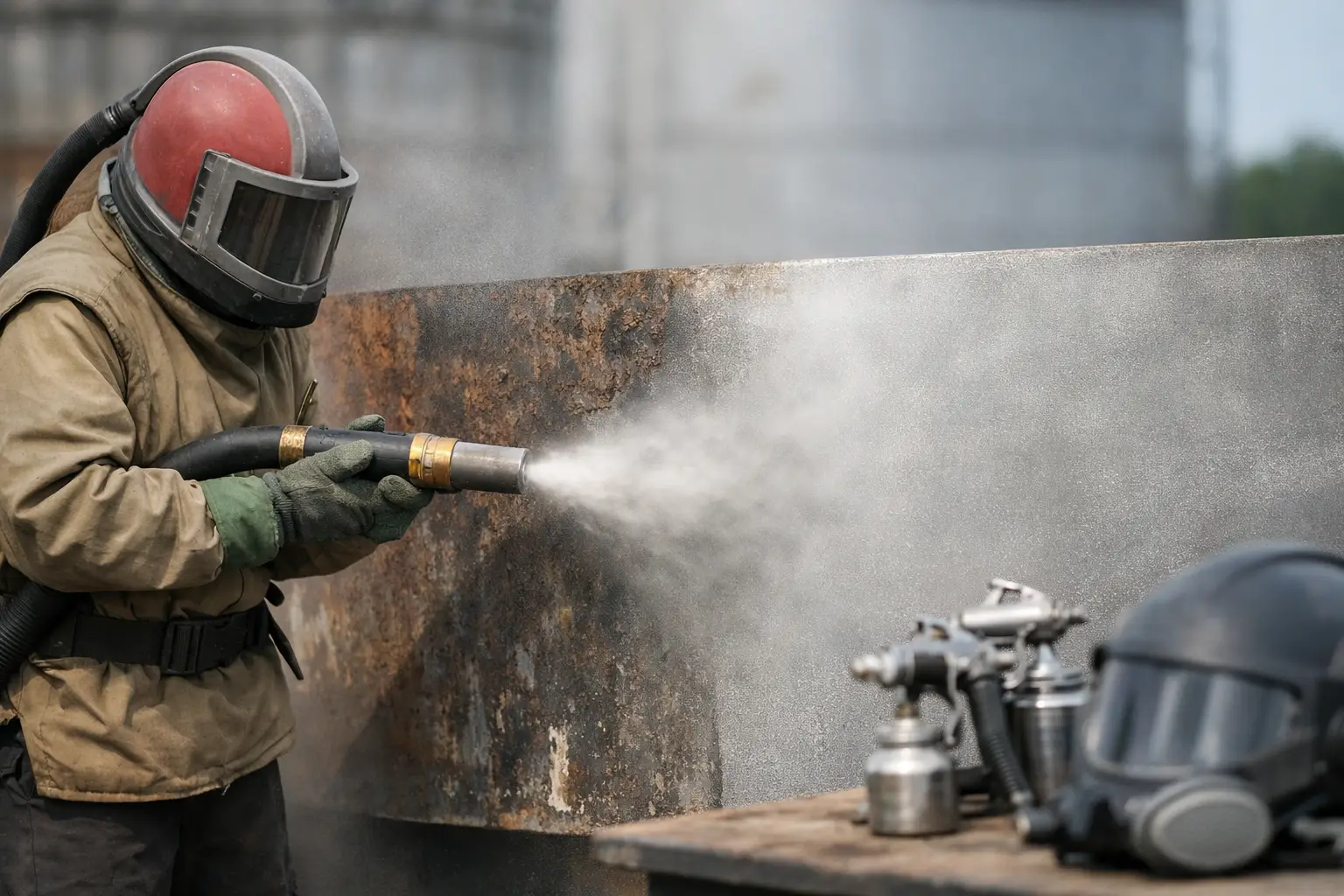
A new paint job can only perform as well as the surface beneath it. Sandblasting preparation for repainting removes the rust, failed coating, scale, and contaminants that cause fresh paint to lift, bubble, or fail early. Whether you are restoring a trailer, machinery, railings, structural steel, or metal patio furniture, the goal is the same: create a clean, stable surface that the next coating can grip.
Blasting is not simply about making an asset look clean. It is a controlled surface-preparation process, and the details matter. The substrate, existing coating, intended paint system, weather conditions, and time between blasting and painting all affect the final result.
Start With the Coating System, Not the Blaster
The right blasting approach depends on what will be applied afterward. A basic maintenance enamel, a two-part epoxy primer, a high-build industrial coating, and powder coating do not all require the same surface profile or preparation standard.
Before work begins, identify the substrate and the finish you plan to use. Steel often needs a thoroughly cleaned surface with enough anchor profile for the primer to bond. Aluminum can be damaged or distorted by aggressive media and requires a different approach. Masonry may need coating removal without opening up the surface excessively. Wood and delicate trim may be better served by a gentler blasting method or another removal process altogether.
If a paint manufacturer provides preparation instructions, follow them. Those specifications may call for a particular cleanliness standard, profile range, primer type, or maximum time allowed between blasting and coating. This is especially relevant for commercial equipment, fleet assets, structural components, and jobs exposed to moisture, road salt, or chemicals.
Inspect the Surface Before Blasting
A thorough inspection prevents expensive surprises later. Look beyond the obvious peeling paint and surface rust. Check for deep pitting, cracked welds, thin metal, loose fasteners, body filler, old repairs, and areas where moisture may be trapped.
Old paint may also contain hazardous materials. On older buildings, equipment, or fabricated parts, coatings can contain lead or other regulated substances. These projects require appropriate testing, containment, personal protection, and disposal procedures. Do not assume every old painted surface can be blasted in an open area.
Inspection also helps define the real scope of the job. Blasting will expose what corrosion has hidden. A panel that appears solid under paint may reveal pinholes or severe pitting once the coating and rust are removed. That is not a blasting failure. It is useful information that allows repairs to happen before new paint seals the problem back in.
Choose Media for the Material and the Result
“Sandblasting” is the common name, but professional abrasive blasting can use a range of media. The choice affects cleaning speed, surface profile, dust levels, and the risk of damage to the workpiece.
For heavily rusted steel or thick industrial coatings, a more aggressive abrasive may be needed to remove corrosion and establish a suitable profile. For thinner sheet metal, aluminum, delicate parts, or restoration work, a gentler media and lower pressure can reduce the risk of warping, gouging, or stretching the surface.
The desired finish matters as much as removal power. Paint needs mechanical grip, but a surface that is too smooth can limit adhesion. On the other hand, a profile that is too aggressive can show through thin coatings, require extra primer, or create peaks that are difficult to cover. The correct profile is based on the coating system, not on making the metal as rough as possible.
A qualified blasting provider will also consider where the project is located. Outdoor work requires dust control and care around nearby vehicles, windows, landscaping, and neighboring property. In a shop environment, containment and recovery may be practical. For certain restoration projects, lower-dust or alternative media can be the better fit.
Get the Surface Clean, Not Just Bare
Bare metal is not automatically paint-ready. After blasting, the surface should be checked for remaining coating, rust in pits, abrasive residue, dust, oil, and salts. These contaminants can interfere with adhesion even when the metal looks bright and clean.
Oil and grease deserve special attention. Blasting can drive oily contamination into the profile rather than remove it completely. Degreasing should happen before blasting when needed, and a final cleaning step may be required afterward. Use cleaning products compatible with the paint system, and avoid leaving lint, residue, or fingerprints on the prepared area.
Compressed air quality matters, too. Air contaminated with moisture or compressor oil can deposit contaminants on freshly blasted steel. Professional setups use proper moisture and oil control to keep the air supply clean.
For critical work, surface cleanliness can be verified against the relevant coating specification. On everyday restoration jobs, a practical inspection still goes a long way: the surface should be uniformly clean, dry, free of visible residue, and ready for primer without additional sanding or scraping.
Prime Quickly to Prevent Flash Rust
Freshly blasted steel begins reacting with moisture immediately. In humid conditions, flash rust can appear within hours. On the West Coast and throughout wet seasons, that window can be very short.
The best practice is to have primer, equipment, and a suitable paint area ready before blasting starts. Once the surface has been cleaned and inspected, apply the specified primer as soon as conditions allow. Do not leave bare steel overnight unless the coating manufacturer specifically permits it and the surface can remain protected from humidity, condensation, dust, and handling.
If flash rust develops, do not paint over it just because it looks light. The correct response depends on the coating system and the severity of the rust. Minor discoloration may be acceptable under some specifications, while other systems require re-cleaning or re-blasting. When in doubt, follow the paint manufacturer's guidance rather than gambling with the job.
Temperature and dew point also matter. A metal surface can look dry while being cold enough for condensation to form. Painting over condensation traps moisture at the coating interface, which can lead to blistering and corrosion. Keep the surface temperature safely above the dew point and within the coating manufacturer's application range.
Do Not Skip Repairs Between Blasting and Painting
Blasting creates the best opportunity to repair the asset correctly. With rust and failed paint removed, damaged sections are visible and accessible. This is the time to weld cracks, replace badly corroded material, fill pits where appropriate, straighten components, or address drainage issues that caused the corrosion in the first place.
For example, repainting a steel gate without correcting water-trapping seams may make it look better temporarily, but the same corrosion cycle will return. Equipment frames, trailers, and outdoor railings benefit from checking joints, overlaps, bolt holes, and underside areas where water and debris collect.
After repairs, those areas usually need additional cleaning or spot blasting before primer. Welding scale, heat discoloration, grinding dust, and bare repair areas all need attention. A clean repair blended into a well-prepared surrounding surface gives the coating system a fair chance to perform consistently.
Match Primer and Topcoat to the Job
The primer is not an optional middle layer. It connects the prepared surface to the topcoat and provides much of the corrosion resistance in a paint system. For bare steel exposed outdoors, a quality primer designed for corrosion control is often more valuable than spending extra money on a decorative topcoat alone.
Choose products based on actual service conditions. A handrail under cover has different needs than a utility trailer exposed to road spray, a piece of agricultural equipment, or industrial steel exposed to chemicals. Ask whether the surface will face sunlight, abrasion, standing water, salt, fuel, fertilizer, or frequent washing.
Apply coatings at the recommended film thickness. Too little material can leave the surface under-protected. Too much can cause runs, solvent entrapment, slow curing, or premature cracking. Respect recoat windows, curing times, and temperature requirements. Good blasting preparation cannot compensate for a coating applied outside its instructions.
When Professional Blasting Makes the Difference
Small, simple items can sometimes be prepared with hand tools, but large or heavily corroded surfaces are different. Grinding and wire brushing can remove loose material, yet they often leave rust in pits and unevenly prepared areas behind. They also take considerable time on frames, machinery, fencing, steel structures, and old coatings that have bonded tightly.
Professional blasting brings controlled media selection, appropriate equipment, and a faster path to a consistently prepared surface. It is particularly useful when a project needs to move from stripping to repair and repainting without long delays. Gorilla Sandblasting helps property owners, restoration clients, and commercial operators start with the clean foundation a durable coating requires.
The practical move is to plan blasting and painting as one connected job. Have the coating system selected, repairs identified, and primer ready before the abrasive work begins. That preparation keeps bare material from sitting exposed and gives your repainting project the durable start it deserves.