
A failed paint job often starts long before the paint is applied. Rust left in pits, loose coating around edges, mill scale on steel, and grime trapped in rough surfaces can all prevent a new finish from holding up. Professional sandblasting services address the problem at its source by removing the material that ordinary washing, scraping, and sanding leave behind.
For homeowners, equipment owners, and commercial operators in British Columbia, blasting is not simply about making an item look cleaner. It is about creating the right surface for repair, refinishing, corrosion protection, or restoration. The quality of that surface preparation affects how the next step performs.
What Sandblasting Services Actually Do
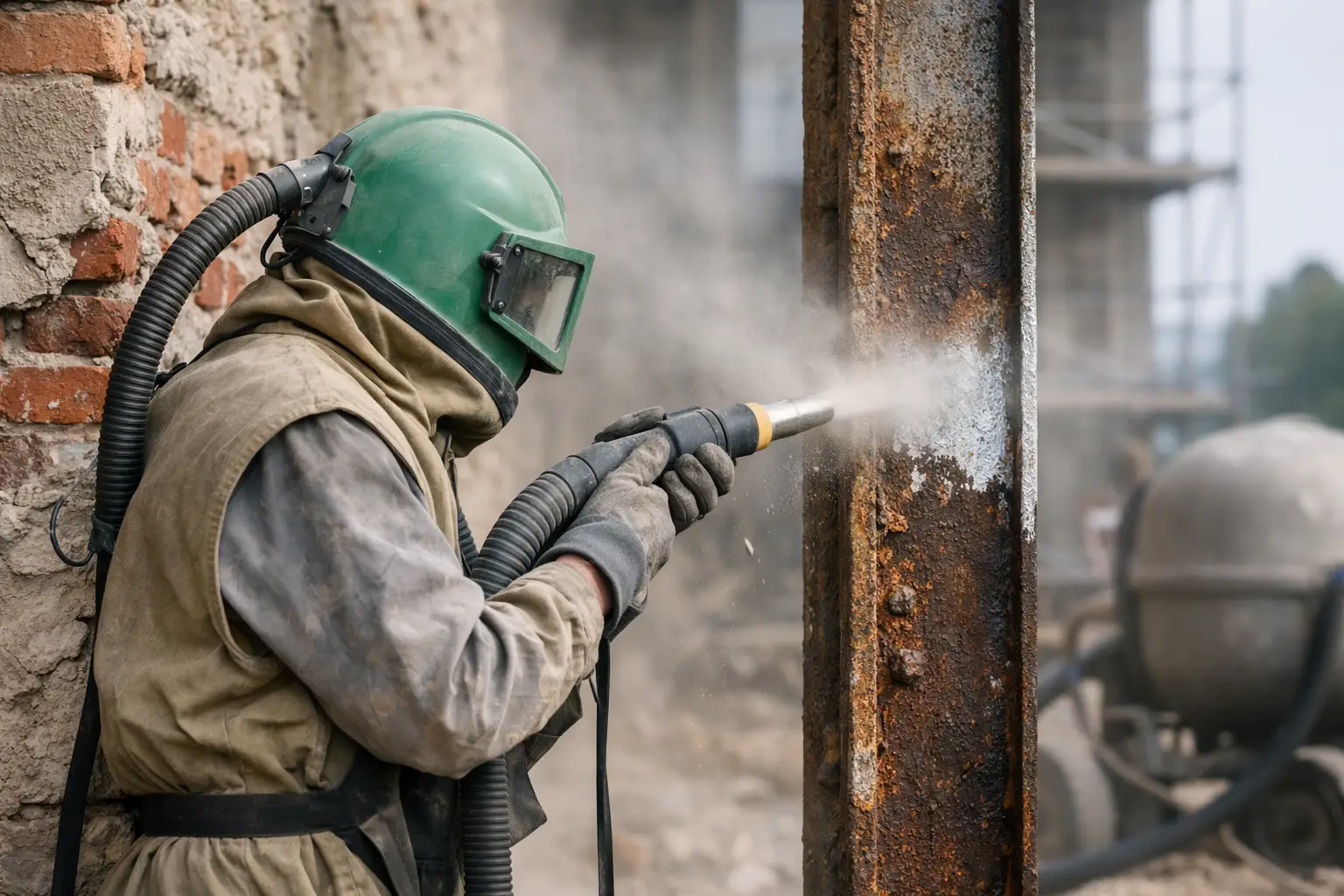
Sandblasting is a form of abrasive blasting. A pressurized stream propels abrasive media against a surface to remove unwanted coatings and contamination. Depending on the job, the process can strip paint, remove rust and oxidation, clean heavy scale, eliminate surface corrosion, or prepare a substrate for primer, powder coating, welding, or repair.
The word "sandblasting" is widely used, but professional work is not always performed with sand. The best media depends on the material, the condition of the surface, the desired finish, and the work planned afterward. A steel component with deep corrosion requires a different approach than old brickwork, aluminum, a vehicle frame, or delicate architectural metal.
That distinction matters. Aggressive blasting can be effective on thick coatings and heavily rusted steel, but it can also damage thin metal or softer masonry if the media, pressure, and technique are wrong. The goal is controlled removal, not unnecessary material loss.
When Blasting Is the Right Choice
Abrasive blasting is often the most practical option when a surface has reached the point where hand tools are no longer efficient. This is common with equipment that has spent years outdoors, metal railings with peeling paint, trailers with road corrosion, structural steel, and industrial parts covered in old coatings.
It is also useful when a clean finish is required across complex shapes. Corners, welds, seams, bolt areas, textured surfaces, and pitted metal are difficult to prepare evenly with a grinder or wire wheel. Blasting reaches those areas and creates a more consistent surface profile.
For restoration work, the benefits are especially clear. Removing deteriorated paint and corrosion reveals the true condition of the asset. Once the surface is clean, it is easier to identify cracks, thin spots, failed welds, prior repairs, and areas that need additional attention before coating.
Blasting is not automatically the answer for every item. Some delicate surfaces, very thin metal, certain historic materials, and areas where dust containment is difficult may require another method or a more carefully controlled blasting process. A professional assessment helps avoid treating every project as if it were the same.
Surface Preparation Determines Coating Performance
Paint and protective coatings need a stable, clean surface to bond properly. If rust, oil, loose paint, or chalky residue remains underneath, the coating may look good at first but fail earlier than expected. Peeling, bubbling, flaking, and rust bleeding through a new finish are often surface-preparation problems.
A properly blasted surface does two jobs at once. It removes material that should not be there, and it creates a profile that helps the coating adhere. The appropriate profile depends on the coating system. A heavy industrial coating may need a different surface texture than a finish coat intended for decorative metalwork.
Timing after blasting also matters. Bare steel can begin to oxidize quickly, particularly in damp conditions. If a freshly blasted part will be painted, primed, or otherwise protected, that next step should be planned before the blasting work begins. Delays can mean contamination or flash rust, which may require additional preparation.
Choosing the Right Method for the Material
The strongest blasting result is not necessarily the most aggressive one. It is the result that removes the unwanted material while protecting the substrate and leaving it ready for its intended use.
Metal, Equipment, and Structural Components
Steel equipment, machinery parts, trailers, railings, frames, and fabricated components commonly need blasting to remove corrosion, paint, scale, and embedded grime. These projects may require a more assertive process, especially where corrosion has built up in pits and seams.
Even so, condition matters. Thin sheet metal can warp if it is treated carelessly, while heavy steel can tolerate a different approach. Components with bearings, electrical connections, hydraulic fittings, threads, or sensitive mechanical areas may need masking, disassembly, or protection before work starts.
Masonry and Durable Exterior Surfaces
Masonry blasting requires restraint. Brick, stone, concrete, and similar materials can carry old paint, staining, graffiti, mineral deposits, or surface contamination, but they can also be permanently marked or weakened by an overly aggressive process.
The right method depends on the masonry itself and the goal of the project. Is the objective to remove paint without changing the appearance of the brick? Is the surface being prepared for a new coating? Is there damage that needs to remain visible for repair? These are practical questions that should be discussed before the work begins.
Restoration Pieces and Specialty Items
Gates, antique metal pieces, wheels, cast components, outdoor furniture, and architectural elements can often be restored successfully through blasting. These jobs benefit from careful media selection and controlled pressure because the value may be in the details: crisp edges, cast texture, stamped markings, or thin decorative sections.
A clean surface does not always mean a perfectly smooth one. On aged metal, blasting may reveal pitting that was hidden under old paint and corrosion. That is useful information. It allows the owner or repair professional to decide whether the piece should be filled, repaired, coated as-is, or replaced.
What to Prepare Before a Blasting Project
The best way to get an accurate estimate and a smooth job is to share clear details early. Photos are helpful, but the intended outcome is just as important. A contractor needs to know whether the item will be painted, powder coated, welded, repaired, sold, or returned to service without a finish.
Before work begins, remove personal items, loose accessories, and components that do not need blasting when possible. Identify anything sensitive, including glass, rubber, electrical parts, plastic trim, machined surfaces, identification plates, and threaded areas. If those items cannot be removed, point them out so protection can be considered.
It is also worth thinking through transport and access. Some projects are best handled at a dedicated facility, while others may need on-site work because the item is too large or fixed in place. On-site blasting can be practical for certain structures and equipment, but surrounding property, dust control, weather, and access all affect the plan.
Questions That Lead to Better Results
Before booking sandblasting services, ask what media and process are appropriate for the substrate, what level of cleanliness will be achieved, and what the surface will look like afterward. If the item is being coated, ask how soon it needs to be primed and whether the blasting profile suits the coating manufacturer’s requirements.
You should also discuss areas that may need masking or special handling, whether the work will expose hidden damage, and what post-blasting cleanup is included. Clear communication prevents avoidable surprises, particularly on restoration projects where the condition beneath an old coating is unknown.
Price matters, but the lowest estimate is not always the lowest total cost. If blasting leaves rust in difficult areas, damages a substrate, or creates a surface that is unsuitable for the next coating, the project can become more expensive to correct. Good preparation protects the value of the work that follows.
A Clean Start for Work That Needs to Last
Whether the project is a rusted trailer, aging steel railing, commercial equipment, masonry with failing paint, or a restoration piece that deserves a second life, preparation sets the standard. Gorilla Sandblasting focuses on getting durable surfaces clean and ready for the next stage of the job.
Bring the end goal to the first conversation. When the blasting process is matched to the material, the condition, and the finish you plan to apply, the result is more than a cleaner surface. It is a dependable foundation for work that is meant to last.