

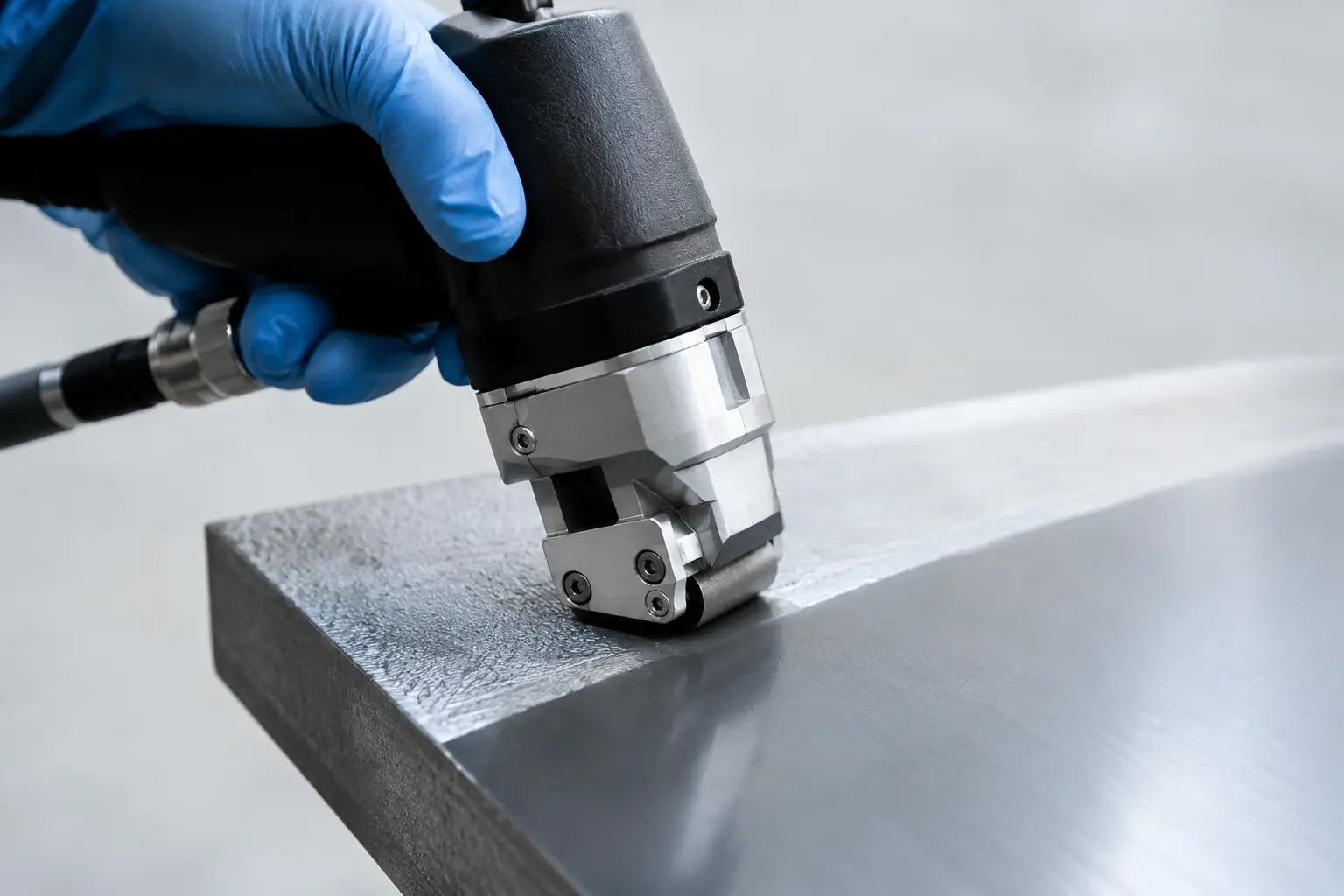
A freshly blasted steel surface can look clean and still be wrong for the coating planned next. Surface profiling is the controlled texture left behind after abrasive blasting, and it plays a direct role in how well paint, primer, or protective coating holds up over time. Get it right, and the coating has a strong mechanical bond. Get it wrong, and even a quality coating system may peel, chip, or fail early.
For homeowners restoring railings or machinery, and for commercial operators protecting steel equipment, surface profile is not a detail to leave to chance. It is part of the preparation work that determines whether the finished surface performs as expected.
What Surface Profiling Actually Means
Surface profiling creates an anchor pattern: a series of microscopic peaks and valleys in the substrate. When a coating is applied, it flows into those valleys and cures around the peaks. That added contact area gives the coating something to grip beyond a smooth, flat surface.
Think of the difference between trying to tape something to polished glass and applying it to a lightly textured surface. The texture alone is not the whole answer, but it gives the coating a better foundation.
Profile is commonly measured in mils, or thousandths of an inch, and microns. The correct depth depends on the coating manufacturer’s specification, the substrate, the service environment, and the material being applied. A thin single-coat finish generally needs a finer profile than a high-build epoxy or industrial protective system.
A profile that is too shallow may not provide enough mechanical adhesion. A profile that is too deep can create another problem: the coating may not fully cover the deepest valleys. Those unprotected low points can become starting points for corrosion, especially where equipment is exposed to moisture, road salt, or changing weather.
Cleanliness and Profile Are Different Jobs
Blasting often handles two jobs at once. It removes rust, old paint, mill scale, and contaminants while also creating the desired texture. Because both happen during the same process, it is easy to assume a surface that looks clean has the right profile. That assumption can be costly.
Surface cleanliness describes what has been removed. Surface profile describes the texture that remains. A metal part can be blasted bright and clean but have a profile too light for a heavy protective coating. It can also have an aggressive profile that looks acceptable from a distance but is not suitable for a thin finish.
The right preparation plan addresses both requirements before blasting begins. This is particularly important when a coating contractor has provided a product data sheet or specified a preparation standard. Those instructions should guide abrasive selection, blasting pressure, and inspection.
What Controls the Surface Profile
There is no single blasting setting that works for every job. The resulting profile comes from the relationship between the abrasive, the equipment, and the surface itself.
Abrasive Type and Size
Angular abrasives tend to cut into a surface and produce a sharper, more defined anchor pattern. Materials such as crushed glass, slag, and certain mineral abrasives are often selected when coating adhesion and paint removal are key goals.
Round media, including some types of shot or bead, tends to peen the surface instead of cutting as aggressively. That can be useful for certain cleaning or finishing applications, but it may not create the profile required for a protective coating system.
Particle size also matters. Larger abrasive particles can create a deeper profile, while finer abrasives generally leave a lighter texture. Bigger is not automatically better. The abrasive has to match the substrate and the coating specification.
Blast Pressure, Distance, and Angle
Higher pressure can increase cutting action, but it must be controlled. Too much force may damage thin metal, distort delicate parts, or produce a rougher surface than needed. Lower pressure may be better for sensitive materials, though it can reduce production speed and cleaning power.
The distance between the blast nozzle and the work surface also changes the result. A nozzle held too far away loses energy. Held too close, it can concentrate the stream and create uneven results. The operator’s angle and travel speed matter as well, particularly around welds, corners, edges, and pitted areas.
Substrate Condition
New steel, heavily rusted steel, cast iron, aluminum, masonry, and previously coated surfaces do not react the same way. Deep rust pits can make a surface appear heavily profiled even after blasting, but corrosion pitting is not a controlled anchor pattern.
Thin sheet metal needs more caution than a heavy structural beam. Soft metals can be damaged by aggressive media. Masonry may need a cleaning approach that preserves the material rather than cutting deeply into it. A professional assessment helps determine what the surface can tolerate before the work starts.
How Profile Is Checked
Visual inspection is useful, but surface profile should not be judged by appearance alone when coating performance matters. The most common methods include profile comparator disks, replica tape, and electronic surface profile gauges.
Comparator disks allow the inspector to compare the blasted surface with known profile samples by sight and touch. Replica tape is pressed onto the surface to capture the peak-to-valley pattern, then measured with a micrometer. Electronic gauges provide a direct digital reading and can be useful for documenting larger projects.
The method matters less than using it consistently and comparing the result with the coating requirements. If a primer calls for a specific profile range, the surface should be checked before coating starts, not after a failure appears months later.
Matching the Profile to the Finish
The coating system should lead the preparation decision. If the plan is to apply a thin automotive-style finish, a very aggressive blast profile can show through the coating or require extra material to fill. If the goal is a high-build epoxy on industrial steel, a smoother surface may not give the coating enough grip.
This is why blasting should be discussed alongside the next step, whether that is painting, powder coating, welding repair, or corrosion protection. The best blasting method for stripping an old trailer may differ from the best method for preparing a steel gate, a piece of farm equipment, or a structural component.
Timing matters too. Once bare metal is exposed, it can begin to flash rust quickly in humid conditions. A properly profiled surface should be kept clean, dry, and protected from fingerprints, dust, salts, and moisture until coating can begin. Delays between blasting and coating should be minimized whenever possible.
Common Problems That Undercut Good Blasting Work
One common issue is choosing an abrasive based only on how quickly it removes paint. Fast removal is valuable, but it does not replace profile control. Another is blasting a surface without confirming what coating will follow. The result may be clean metal that requires additional work before finishing.
Overblasting can also create problems. On thin material, it can lead to warping. On detailed components, it can round edges or damage surfaces that need to remain precise. Underblasting leaves rust, old coating, or contamination behind and may not establish the required texture.
The goal is not to make every surface as rough as possible. The goal is to create a clean, even profile suited to the work ahead.
A Better Starting Point for Your Project
Before scheduling blasting, identify the substrate, its condition, and the finish you want after preparation. If you already have a paint or coating product selected, keep its technical requirements available. That information can help determine the appropriate blasting approach and reduce surprises during the finishing stage.
Gorilla Sandblasting approaches preparation work with the finished result in mind, not just the removal of what is currently on the surface. A properly profiled surface may be invisible once it is coated, but it is one of the clearest signs that restoration or protection work started on solid ground.