
A fresh coat of paint cannot fix rust hiding beneath an old finish, nor can it bond reliably to a surface covered in scale, corrosion, or failing coating. Abrasive blasting addresses the problem at its source by removing those layers and creating the clean, textured foundation that repair and protective coatings require. For equipment, steelwork, masonry, trailers, gates, and restoration projects, that preparation often determines whether the finished work lasts or starts failing early.
What Abrasive Blasting Actually Does
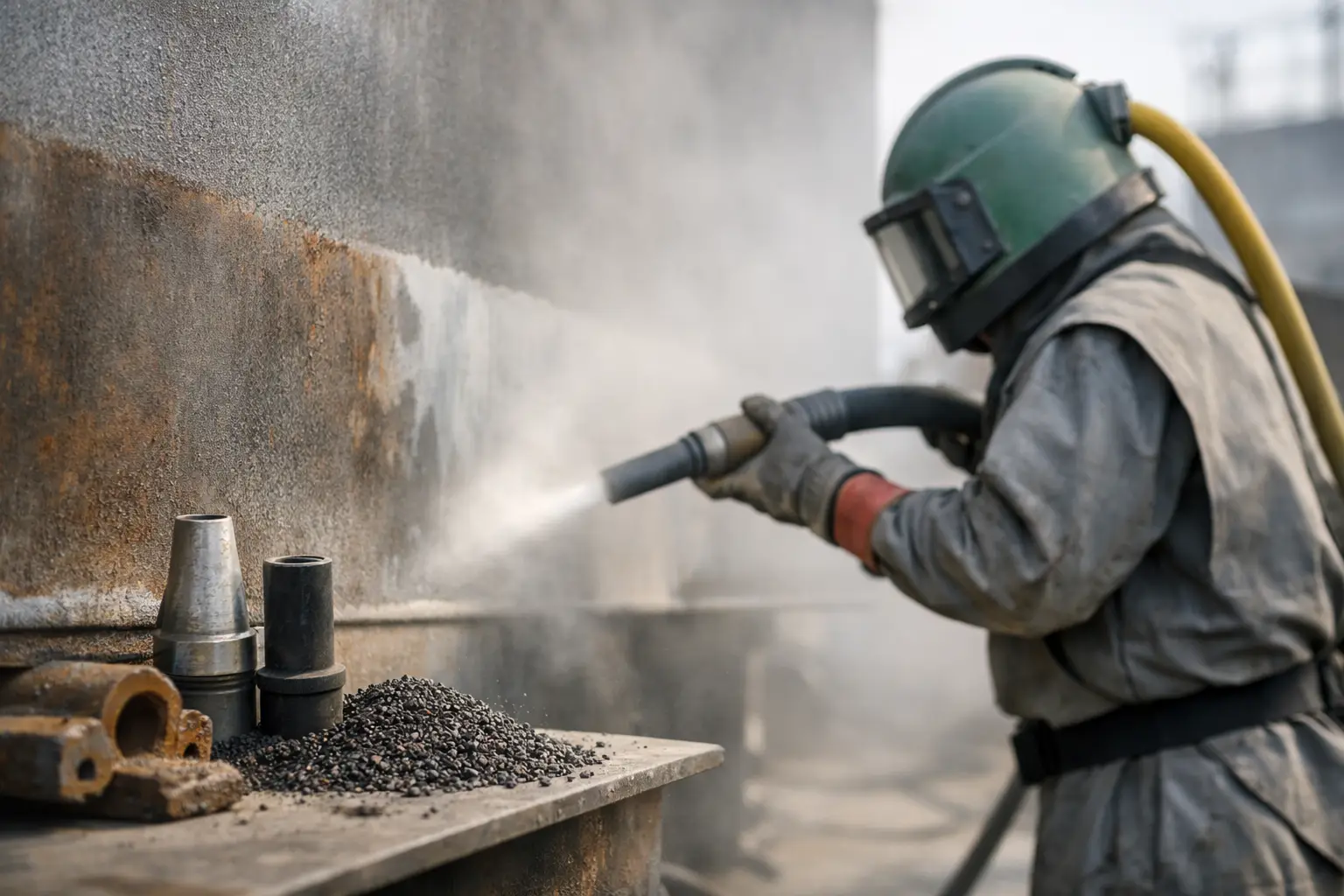
Abrasive blasting propels a selected blasting media at a surface under controlled pressure. The impact breaks away unwanted material, including old paint, rust, mill scale, oxidation, corrosion, and embedded grime. It can also create a surface profile, which is the fine texture that helps a new coating grip the substrate.
The goal is not simply to make an item look clean. A surface can appear clean while still carrying invisible residue, loose corrosion, or a finish that is no longer sound. Blasting removes weak layers so the next step - whether that is welding, repair, painting, powder coating, sealing, or inspection - starts on solid material.
The result depends on the substrate, the condition of the surface, the blasting media, air pressure, nozzle distance, and the standard required for the coating system. A heavy steel machine part and an older brick wall should not be treated the same way. Good surface preparation is controlled work, not just aggressive cleaning.
Why Surface Preparation Makes or Breaks a Finish
Paint and protective coatings need a stable surface. If rust remains beneath a new coating, moisture can continue working underneath it. The coating may bubble, peel, or chip long before it should. The same problem occurs when new paint is applied over loose old paint, oily contamination, or hard scale.
Blasting gives a coating a better mechanical bond by exposing sound material and creating the appropriate profile. Too little profile can leave a coating with limited grip. Too much profile can create peaks that are difficult to cover completely, leaving high points vulnerable to early rusting. The right finish depends on the coating manufacturer’s requirements and the service conditions the asset will face.
For a homeowner, that may mean preparing a wrought-iron railing before repainting. For a commercial operator, it may mean removing corrosion from a trailer, tank, structural component, or piece of equipment before applying a protective industrial coating. The scale changes, but the principle does not: lasting work starts with a properly prepared surface.
Choosing the Right Blasting Media
The word sandblasting is widely used, but modern blasting work can involve several types of media. The best choice depends on what needs to be removed and what must be protected. Using an overly aggressive media on a delicate surface can cause damage; using a mild media on a thick coating can waste time and produce an incomplete result.
Common media options include:
- Crushed glass, often used for efficient coating and rust removal on durable metal surfaces.
- Garnet, a hard, sharp media that can provide a consistent profile for demanding coating preparation.
- Steel grit or shot, used in certain controlled applications where a strong cleaning action or particular finish is needed.
- Soda or other softer media, which may be appropriate when reducing impact on sensitive surfaces matters more than creating a heavy profile.
- Organic media, such as walnut shell, for select cleaning applications where the base material needs extra care.
There is no single “best” media for every job. Thick rust on a steel trailer calls for a different approach than paint removal from masonry or cleanup of a component that cannot tolerate distortion. The right media also affects containment, cleanup, dust levels, and the condition of the surface after blasting.
Metal, Masonry, and Equipment Need Different Approaches
Metal is one of the most common abrasive blasting substrates because it frequently suffers from rust, old coatings, and mill scale. Steel frames, farm equipment, trailers, railings, gates, wheels, and fabricated components can often be restored effectively when the metal still has adequate thickness and structural integrity. Blasting reveals the true condition of the material, including pitting, cracks, thin areas, and previous repairs that paint may have concealed.
That visibility is valuable, but it can also change the scope of a project. Blasting does not rebuild metal that has rusted away. It prepares what remains for repair or coating. If severe pitting or perforation is exposed, welding or replacement may be needed before finishing can continue.
Masonry requires more caution. Brick, concrete, and stone vary widely in hardness, age, porosity, and condition. Aggressive blasting can erode the face of brick, open the surface of softer stone, or damage mortar joints. On the other hand, carefully selected media and pressure can help remove graffiti, coatings, or built-up contamination where other methods have failed. Testing a small area is often the sensible first step when working on older or decorative masonry.
Equipment brings its own variables. Bearings, seals, hydraulic fittings, electrical components, glass, machined surfaces, and identification plates may require masking or removal before blasting begins. A good plan protects areas that should not be exposed while giving corroded or coated sections the cleaning they need.
What to Expect From a Professional Blasting Project
A reliable project starts with an assessment of the asset, not a quick guess from across the yard. The condition of the surface, type of coating, accessibility, size, and desired end result all affect the recommended process. Some coatings may require additional safety controls, and certain jobs need more containment than others to protect nearby property and manage debris.
Before blasting, remove loose accessories and identify areas that need protection. If the item will be repainted, decide on the coating plan early. Bare metal can begin developing flash rust quickly in humid conditions, so timing between blasting and priming matters. The best practice is usually to apply the appropriate primer as soon as practical after the surface has been cleaned and inspected.
After blasting, expect the surface to look more honest than it did before. Old paint can hide dents, weld marks, corrosion pits, patches, and uneven repairs. That is not a failure of the process. It is the process revealing what needs attention before money is spent on a finish coat.
When Blasting Is Not the Best First Option
Abrasive blasting is powerful, but it is not automatically the right answer. Thin sheet metal can warp if the process is too aggressive. Delicate trim, soft wood, historic brick, and certain composite materials may need another cleaning method or a very specialized approach. Surfaces contaminated with oil or grease may also need degreasing before blasting, since blasting can spread contamination rather than remove it completely.
There are also cases where localized hand preparation makes more sense than mobilizing blasting equipment. A small repair area, a component with difficult access, or a surface surrounded by sensitive finishes may be better handled through grinding, sanding, chemical stripping, or another controlled method. The practical question is not whether blasting is the toughest option. It is whether it produces the cleanest, safest, and most cost-effective result for the job.
For larger restoration and coating projects, the right preparation can save significant time and expense later. Gorilla Sandblasting helps clients start with that foundation: a clean, properly prepared surface ready for the work that comes next. If rust, failing paint, or hard contamination is standing between an asset and a durable finish, a project assessment is the right place to begin.