
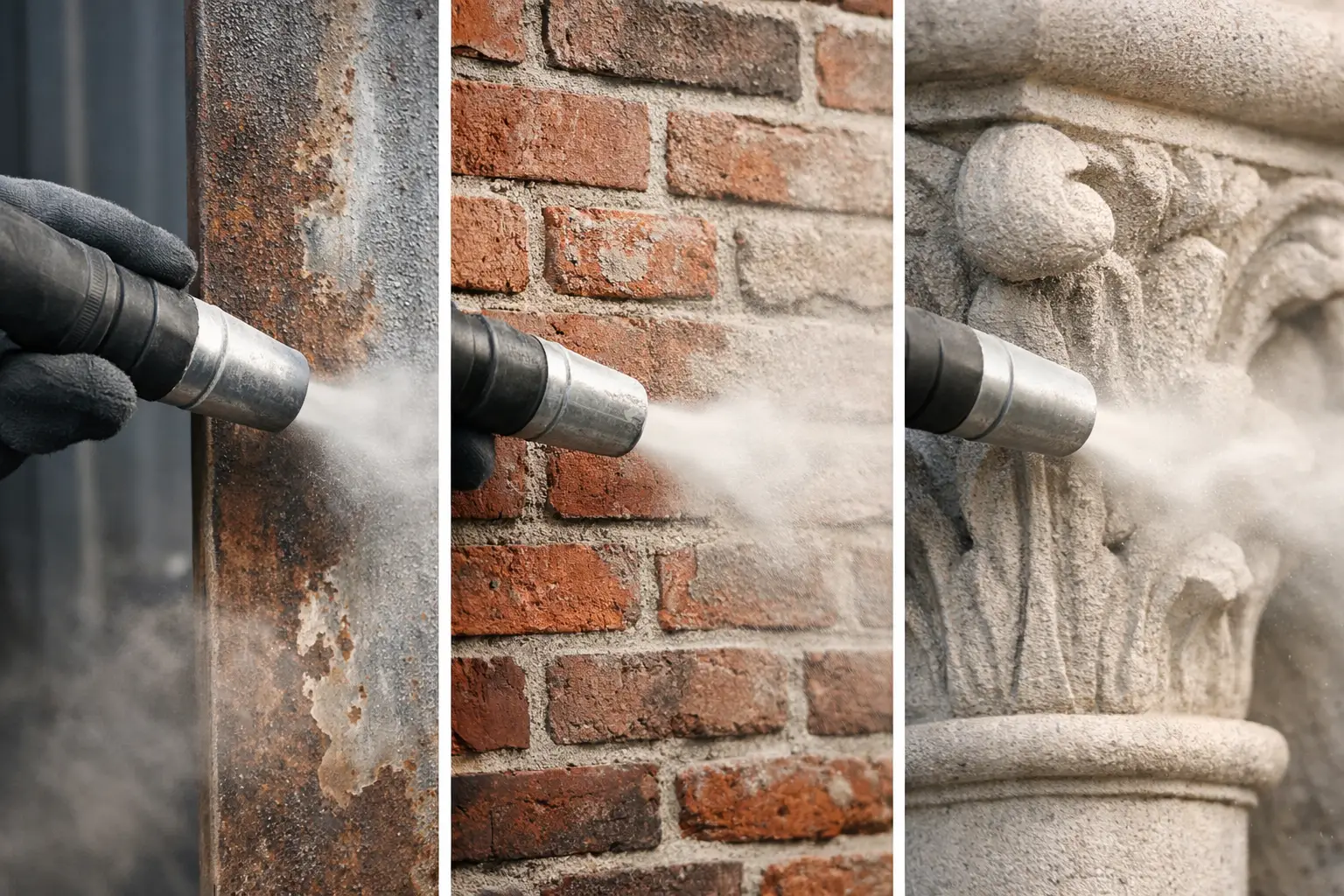
A rusty steel trailer frame and a weathered brick wall may both look like candidates for the same treatment, but they should not be blasted the same way. What surfaces can be sandblasted depends on the material, its condition, the coating being removed, and the finish required afterward. Abrasive blasting is highly effective when it is matched to the job. When it is not, it can leave a surface rougher, thinner, or more damaged than intended.
For restoration, maintenance, and coating preparation, the goal is not simply to make a surface look clean. The goal is to remove what does not belong there while preserving a sound foundation for repair, paint, powder coating, or corrosion protection.
What Surfaces Can Be Sandblasted?
Most durable materials can be abrasive blasted with the right media, pressure, nozzle distance, and operator control. Steel, iron, aluminum, concrete, brick, stone, and heavy equipment are common examples. The word “sandblasting” is often used for the whole process, although professionals may use different abrasive media depending on the substrate.
The key distinction is between a hard, stable surface and one that is thin, soft, brittle, decorative, or structurally compromised. A steel beam can generally handle a more aggressive abrasive than a historic brick facade. A heavily corroded truck part may need a controlled approach so the remaining metal is not weakened further.
Steel and Iron
Steel and iron are among the best candidates for abrasive blasting. This includes railings, gates, structural steel, trailers, vehicle frames, machinery, farm equipment, shipping containers, tanks, and fabricated metal components.
Blasting can remove rust, mill scale, flaking paint, oxidation, old coatings, and surface contaminants that interfere with adhesion. It also creates a surface profile, sometimes called an anchor pattern, that helps a new coating grip the metal properly.
The condition of the metal still matters. Thin sheet metal can warp if heat builds up or blasting pressure is too high. Severely rusted metal may reveal pinholes or weak areas once corrosion is removed. That is not damage caused by the blasting process - it is often existing deterioration that was hidden beneath rust and paint. Finding it early is useful, especially before investing in a new finish.
Aluminum and Other Non-Ferrous Metals
Aluminum, copper, brass, and similar metals can be blasted, but they require more restraint than structural steel. These metals are often softer and can show aggressive profiles, gouges, or distortion if the wrong media is used.
For aluminum truck bodies, boat components, wheels, panels, and fabricated parts, a gentler abrasive and lower pressure can remove oxidation or failed paint without cutting too deeply into the base metal. The right method depends on whether the part will be repainted, polished, welded, or left exposed.
Media selection is especially important for aluminum. Cross-contamination from steel-based abrasives can contribute to future corrosion problems, so the blasting setup must suit the material and the intended finish.
Concrete, Brick, and Masonry
Concrete, brick, block, and some stone surfaces can be blasted to remove paint, graffiti, coatings, smoke residue, mineral staining, and stubborn grime. It can be an effective restoration method for durable masonry, but it is never a one-setting-fits-all job.
Concrete can usually tolerate abrasive blasting when the purpose is coating removal or surface preparation. On a garage floor, equipment pad, retaining wall, or industrial slab, blasting may open the surface and remove failing material before a new coating or repair is applied. The finish can become noticeably more textured, which is useful for adhesion but may not suit every decorative application.
Brick requires greater care. Hard, modern brick can sometimes be cleaned successfully, while old, soft, spalling, or fire-damaged brick may lose its protective face under aggressive blasting. Mortar joints can also erode. For historic structures and delicate masonry, the safest option may involve a much softer media, low-pressure process, or another cleaning method altogether.
Natural stone varies widely. Granite is hard and durable. Limestone, sandstone, and some cast stone are more porous and easier to scar. Before a full project begins, a small test area helps confirm that cleaning results will not come at the expense of the surface itself.
Heavy Equipment, Machinery, and Fleet Assets
Excavator attachments, agricultural equipment, trailers, industrial machinery, steel wheels, bins, and fleet components are frequent blasting candidates. These assets collect rust, grease, scale, old paint, and packed-on debris that ordinary washing cannot remove.
Blasting is particularly valuable when equipment is being repaired or repainted. A clean metal surface makes it easier to inspect welds, cracks, corrosion, and previous repair work. It also gives primers and industrial coatings the clean foundation they need to last.
Not every part of a machine should be blasted. Bearings, seals, hydraulic rods, glass, wiring, identification plates, precision-machined surfaces, and sensitive electronics need to be protected or removed before work begins. A professional assessment identifies which areas can be blasted and which need masking, disassembly, or a different cleaning process.
Surfaces That Need a Gentler Approach
Abrasive blasting is not automatically the best answer for every material. Wood, plastic, fiberglass, glass, rubber, and thin sheet metal can sometimes be treated with specialized low-pressure blasting, but conventional aggressive blasting can quickly cause damage.
Wood is a clear example. Blasting can strip paint from beams, siding, furniture, and log surfaces, but an abrasive that is too hard or too forceful can raise the grain, carve soft areas, and leave an uneven finish. The same is true for fiberglass panels and plastic components, which can become dull, fuzzy, distorted, or permanently marked.
Glass can be etched for decorative purposes, but it should not be treated like a rusty steel gate. Rubber and soft sealants can be torn or degraded. Painted surfaces that only need light cleaning may be better handled with washing, hand preparation, or a lower-impact method.
If the material is thin, soft, historic, decorative, or difficult to replace, it deserves a closer evaluation before blasting starts.
The Coating Matters as Much as the Surface
The material underneath is only half the decision. The coating or contamination on top also affects the process. Loose exterior paint, powder coating, epoxy, rust scale, fire residue, grease, and graffiti all respond differently to abrasive media.
For example, a tough industrial coating may require a sharper, more aggressive media than light paint on masonry. Grease and oil may need to be cleaned first because blasting can drive contaminants into the surface or reduce the effectiveness of the abrasive. Heavy corrosion may call for a more thorough blast profile than a part that only needs cosmetic paint removal.
The desired result should guide the work from the beginning. A surface being prepared for high-performance primer has different requirements than a decorative brick wall that simply needs old paint removed.
Choosing the Right Media and Pressure
Professional blasting is controlled, not indiscriminate. The operator adjusts the process based on the substrate, the coating, the job location, and the final finish. Common media categories include:
- Mineral abrasives for heavy rust, scale, and coating removal on durable metal
- Crushed glass for many metal and masonry cleaning applications
- Soda or other soft media for delicate surfaces and lighter coating removal
- Organic media, such as walnut shell, for select sensitive materials
The media is only one variable. Air pressure, nozzle size, stand-off distance, blast angle, and dwell time all change the result. A capable operator can use a process that cleans a surface efficiently without treating every project as if it were heavy structural steel.
Containment and cleanup also matter. Removing an old coating can create dust and debris, and certain legacy coatings may require additional precautions. Project conditions should be reviewed before blasting begins, especially around occupied properties, vehicles, landscaping, and nearby work areas.
A Test Area Can Prevent an Expensive Mistake
When there is uncertainty about a surface, a test patch is one of the best decisions a property owner can make. It shows how the material reacts, how much coating can be removed, what texture remains, and whether the expected finish is realistic.
This is particularly useful for painted brick, old metalwork, thin aluminum, decorative stone, and assets with unknown coating history. A small controlled test gives the project team a clear basis for selecting media and setting expectations before committing to the full area.
Gorilla Sandblasting approaches surface preparation with the end result in mind. Whether the job involves a rusted machine part, a trailer, structural steel, or coated masonry, the right blasting method is the one that leaves the surface clean, sound, and ready for what comes next.
Before scheduling any blasting work, consider what the surface is made of, what needs to come off, and what you plan to put back on it. Those three answers are the starting point for a finish that holds up.